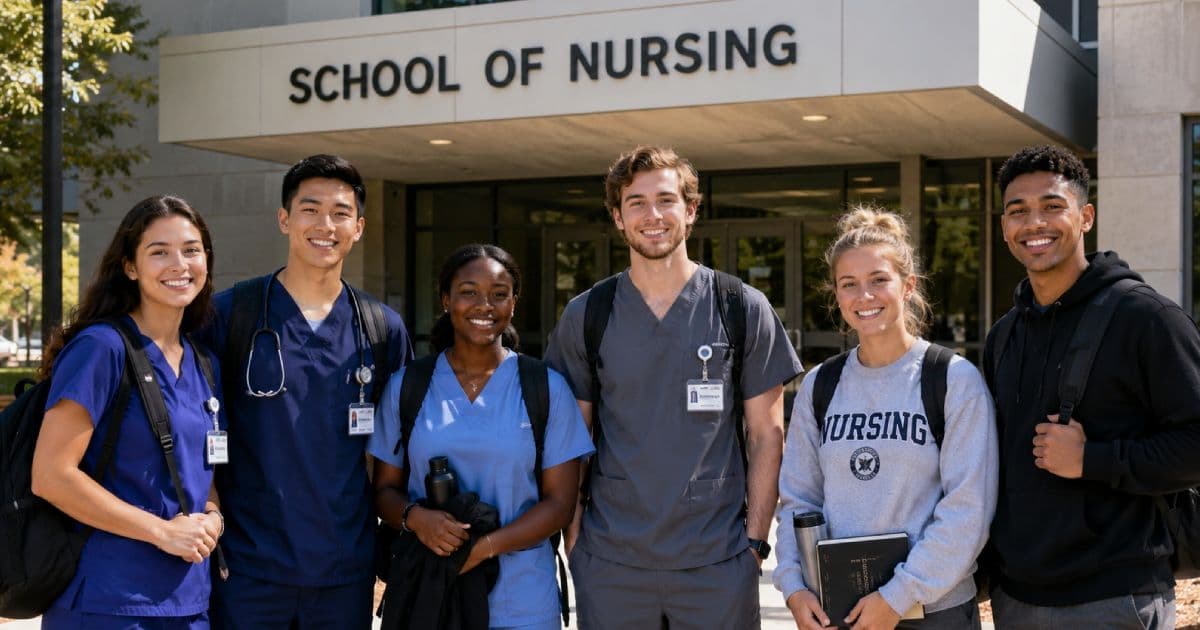
Accelerated BSN programs are built for people who already have college credit, usually a bachelor’s degree in another field, and want to become registered nurses faster than a traditional four-year BSN route.
They can be a good path.
They can also be intense, expensive, and unforgiving if you underestimate the pace.
This guide breaks down what ABSN programs are, who qualifies, what prerequisites you usually need, how much they cost, how hard they are, and how to apply without wasting time or money.
What is an accelerated BSN program?
An accelerated BSN program, often called an ABSN program, is a fast-track Bachelor of Science in Nursing pathway.
Most ABSN programs are designed for students who already hold a bachelor’s degree in a non-nursing field.
Instead of repeating general education courses, you build on your previous degree and complete the nursing major in a compressed format.
You still complete nursing coursework.
You still complete clinical rotations.
You still graduate with a BSN.
You still need to meet your state board of nursing requirements and pass the NCLEX-RN to become licensed as an RN.
AACN describes accelerated baccalaureate programs as one of the quickest routes to RN licensure for adults who already have a bachelor’s or graduate degree in another discipline.
That is the appeal.
You are not starting college from zero.
You are starting nursing from zero.
Those are different things.
ABSN meaning
ABSN usually means:
Accelerated Bachelor of Science in NursingYou may also see schools use:
Accelerated BSN
Accelerated Bachelor’s in Nursing
Second Degree BSN
Second-Degree BSN
Post-Baccalaureate BSN
Accelerated B.S.N.
Accelerated Baccalaureate Nursing Program
These names are often similar, but the details are not always the same.
Always check:
- Degree awarded
- Program length
- State board approval
- Accreditation
- Clinical format
- NCLEX eligibility
- Prerequisites
- Tuition and fees
- Whether it is truly a BSN or another prelicensure degree
Who accelerated BSN programs are for
ABSN programs are usually for students who:
- Already completed a bachelor’s degree in another field
- Want to become an RN
- Want a BSN instead of an ADN
- Can study full time
- Can complete prerequisites before starting
- Can manage a fast academic pace
- Can handle lab, simulation, and clinical expectations
- Are ready for a career change
Common previous majors include:
- Biology
- Psychology
- Public health
- Kinesiology
- Exercise science
- Social work
- Education
- Business
- Communications
- Sociology
- Nutrition
- Health sciences
- Criminal justice
- Human development
You do not need to come from a science major.
But science readiness matters.
A student with a non-science degree can succeed if they do well in anatomy, physiology, microbiology, statistics, and other prerequisites.
A student with a science degree can struggle if they underestimate the clinical judgment, time pressure, and patient-care side of nursing school.
Who ABSN programs may not be right for
An accelerated BSN may not be the best fit if you:
- Need to work full time
- Need a flexible schedule every week
- Have not taken science classes in years and need a slower ramp
- Are still unsure whether nursing is the right career
- Need the cheapest possible RN pathway
- Have a low GPA and weak recent prerequisite grades
- Cannot relocate or commute to clinical sites
- Are not ready for high-stakes testing
- Need predictable evenings, weekends, or holidays free
That does not mean you cannot become a nurse.
It means a different pathway may fit better.
A traditional BSN, associate degree in nursing, evening/weekend ADN, LPN-to-RN bridge, or direct-entry MSN may make more sense depending on your situation.
ABSN vs traditional BSN
A traditional BSN is usually designed for first-degree college students.
An ABSN is usually designed for students who already have a degree.
| Feature | Traditional BSN | Accelerated BSN |
|---|---|---|
| Common applicant | First-degree student | Second-degree or career-change student |
| Typical length | About 4 years total | Often 12-18 months after prerequisites |
| Pace | Standard college pace | Compressed and intense |
| Degree | BSN | BSN |
| RN licensure route | NCLEX-RN after graduation | NCLEX-RN after graduation |
| Cost structure | Often semester-based over several years | Often concentrated tuition over a shorter period |
| Work flexibility | Sometimes more flexible | Often difficult to work during the program |
The degree outcome is usually the same: Bachelor of Science in Nursing.
The experience is different.
ABSN vs ADN
An ADN is an associate degree in nursing.
It can be a strong and often lower-cost route to RN licensure.
An ABSN may be faster for someone who already has a bachelor’s degree and wants the BSN credential immediately.
| Feature | ADN | Accelerated BSN |
|---|---|---|
| Degree | Associate degree in nursing | Bachelor of Science in Nursing |
| Typical setting | Community college or technical college | University or college nursing school |
| Common length | Often 2 years after prerequisites | Often 12-18 months after prerequisites |
| Cost | Often lower, especially in-district | Often higher |
| RN licensure | NCLEX-RN after graduation | NCLEX-RN after graduation |
| BSN completion | May need RN-to-BSN later | BSN included |
An ADN may be the better financial choice.
An ABSN may be the better time-to-BSN choice.
ABSN vs direct-entry MSN
A direct-entry MSN is a graduate-level route for non-nurses.
Some direct-entry MSN programs prepare students for RN licensure and then graduate-level nursing roles.
But not all direct-entry MSN programs are structured the same way.
Before choosing direct-entry MSN over ABSN, ask:
- Do graduates earn RN eligibility?
- Is the degree a BSN, MSN, Master of Nursing, or another credential?
- Does the program prepare for advanced practice, or only entry-level RN practice?
- Will the degree be accepted for the jobs you want?
- How much more does it cost than ABSN?
- Does the program require graduate-level borrowing?
- Does it limit future financial aid?
- Does it make sense before you have RN experience?
How long are accelerated BSN programs?
Many full-time ABSN programs take about 12-18 months after prerequisites.
Examples of program structures include:
- 12 months
- 15 months
- 16 months
- 18 months
- 24 months
- Four quarters
- Three semesters
- Four semesters
- Part-time extended tracks
AACN’s accelerated nursing fact sheet describes fast-track baccalaureate programs as taking 12-18 months to complete, while fast-track master’s programs generally take 2-3 years.
Actual school timelines vary.
For example:
- Arizona State University describes its Accelerated BSN as a full-time 12-month upper-division clinical nursing program.
- East Carolina University describes its accelerated second-degree BSN option as a 12-month full-time in-person program.
- University of Washington describes its ABSN as a four-quarter full-time program.
- Duquesne University describes its Second Degree BSN as a 12- or 16-month program.
- Saint Louis University describes its accelerated BSN as a three-semester, 12-month program.
The calendar matters.
A “12-month” program often means school across terms that would normally include breaks.
Do not assume you will get a long summer off.
How many ABSN programs are there?
AACN’s accelerated nursing fact sheet reports that accelerated nursing programs are available in all 50 states, plus the District of Columbia and Puerto Rico.
The same AACN fact sheet reports that in 2025 there were 340 accelerated baccalaureate programs and 104 accelerated or entry-level master’s programs available at nursing schools nationwide.
That does not mean every program is right for you.
Availability does not guarantee:
- Affordable tuition
- Open seats
- Local clinical sites
- Strong NCLEX outcomes
- State approval in your state
- A schedule that works for you
- Admission with your GPA or prerequisites
Use program directories as a starting point, not the final decision.
Common ABSN admission requirements
Admission requirements vary by school.
Most programs ask for several of the following:
- Completed bachelor’s degree from an accredited institution
- Minimum cumulative GPA
- Minimum prerequisite GPA
- Required science prerequisites
- Official transcripts from every college attended
- Resume
- Personal statement or essays
- Letters of recommendation
- Interview
- Test scores, such as TEAS or HESI, if required
- Health care experience or observation hours, if required
- CPR certification before clinicals
- Background check
- Drug screen
- Immunization records
- Health insurance
- Ability to meet technical standards
Some schools admit students while prerequisites are still in progress.
Others require all prerequisites completed before application.
Some schools allow one or two courses pending after admission.
Others do not.
Read the policy carefully.
Common ABSN prerequisite courses
Most accelerated BSN programs require science and general education prerequisites.
Common requirements include:
- Human anatomy and physiology I with lab
- Human anatomy and physiology II with lab
- Microbiology with lab
- Chemistry, sometimes general chemistry or organic/biochemistry
- Statistics
- Human growth and development
- Nutrition
- Psychology
- Sociology
- Pathophysiology
- Ethics
- English composition
- Oral communication
- Lifespan development
Not every program requires all of these.
Some programs require only a few.
Some require many.
University of Rochester, for example, lists anatomy and physiology I and II with lab, microbiology with lab, human growth and development, and statistics as required prerequisite coursework for its accelerated and prelicensure nursing programs.
University of Washington lists a bachelor’s degree, GPA requirements, prerequisite grades, and paid or volunteer health care experience among its ABSN admission requirements.
Those details show why you cannot rely on a generic checklist.
You need a school-by-school prerequisite audit.
Prerequisite grade expectations
ABSN programs often require minimum grades in prerequisite courses.
Common cutoffs include:
- C or higher
- C+ or higher
- B- or higher
- B or higher in science prerequisites
- Minimum prerequisite GPA
- Minimum science GPA
Competitive programs may prefer A and B grades, especially in:
- Anatomy and physiology
- Microbiology
- Chemistry
- Statistics
A C may meet the minimum and still be weak in a competitive pool.
If you are applying to selective programs, strong recent science grades matter.
Do prerequisites expire?
Some programs set time limits on science prerequisites.
Common rules include:
- Science courses must be within 5 years
- Science courses must be within 7 years
- Science courses must be within 10 years
- No expiration, but recent coursework is preferred
- Case-by-case review
University of Rochester states that anatomy and physiology and microbiology are preferably completed within five years prior to matriculation.
Other schools have different rules.
If your sciences are old, ask admissions before retaking them.
Do not spend money twice unless you know the program requires it.
ABSN prerequisite audit template
Use this before applying.
Program name:
Degree awarded:
State board approval confirmed:
Accreditation confirmed:
Application deadline:
Program start date:
Program length:
Format:
Clinical location policy:

Prerequisite 1:
School where completed:
Credits:
Grade:
Lab included:
Date completed:
Accepted by program? Yes / No / Pending

Prerequisite 2:
School where completed:
Credits:
Grade:
Lab included:
Date completed:
Accepted by program? Yes / No / Pending

Courses still needed:
Old courses that may expire:
Minimum GPA:
My cumulative GPA:
My prerequisite GPA:
My science GPA:
Entrance exam required:
Recommendations required:
Essay required:
Interview required:
Estimated tuition:
Estimated fees:
Estimated living costs:
Financial aid plan:
Backup program:
GPA requirements for accelerated BSN programs
Many ABSN programs list a minimum GPA around 2.8 or 3.0.
Some are lower.
Some are higher.
But minimum does not mean competitive.
Admissions teams may review:
- Cumulative undergraduate GPA
- Last 60 credit GPA
- Prerequisite GPA
- Science GPA
- Grade trends
- Repeated courses
- Withdrawals
- Recent academic performance
- Rigor of prior coursework
- Professional experience
A student with a 3.1 cumulative GPA and A grades in recent sciences may look stronger than a student with a 3.5 from years ago but weak science prerequisites.
Context matters.
Can you get into an ABSN program with a low GPA?
Sometimes.
But you need a strategy.
Strong options include:
- Retake key science prerequisites if allowed
- Earn A grades in recent coursework
- Apply to programs that consider last 60 credits
- Apply broadly
- Write a focused essay
- Explain growth without making excuses
- Show health care exposure
- Choose recommenders who can speak to readiness
- Avoid programs where your GPA is far below the usual admitted range
Do not apply blindly to only one program if your GPA is borderline.
Make a realistic school list.
Health care experience: required or recommended?
Some programs require health care experience.
Some recommend it.
Some do not require it but still value it.
Examples include:
- CNA work
- Medical assistant work
- EMT work
- Patient care technician work
- Scribe work
- Hospital volunteering
- Hospice volunteering
- Clinic volunteering
- Behavioral health technician work
- Caregiver experience
- Shadowing, if allowed
University of Washington’s ABSN admissions page lists a minimum of 100 hours of paid or volunteer health care experience in one setting within a three-month span, completed within 12 months before applying.
That is one school’s rule.
Other schools may not require formal hours.
Still, direct patient exposure helps you answer the most important question:
Do I actually want the daily work of nursing?TEAS, HESI, and entrance exams
Some accelerated BSN programs require an entrance exam.
Common exams include:
- ATI TEAS
- HESI A2
- Kaplan Nursing Admission Test
- School-specific assessments
Other programs do not require entrance exams.
Some paused test requirements after the pandemic and may change policies again.
Check each school’s current admission page.
If an exam is required, treat it like a serious admissions factor.
Do not “wing it” because you already have a bachelor’s degree.
What ABSN programs look for
Strong ABSN applicants usually show:
- Academic readiness
- Science readiness
- Professional maturity
- Clear motivation for nursing
- Realistic understanding of the role
- Communication skills
- Service mindset
- Resilience
- Time management
- Ethical judgment
- Ability to work with diverse patients
- Ability to accept feedback
- Commitment to finishing a demanding program
They are not only asking:
Can this person get admitted?They are asking:
Can this person finish the program, pass NCLEX, and practice safely as a new nurse?How hard are accelerated BSN programs?
Accelerated BSN programs are hard because they compress nursing education.
The challenge is not one thing.
It is the combination.
You may have lecture, skills lab, simulation, clinical, medication math, care plans, exams, group projects, reading, documentation, checkoffs, and NCLEX-style questions in the same week.
The material is not only memorization.
You need to apply it.
You need to decide what matters first.
You need to connect symptoms, labs, medications, procedures, safety risks, and patient priorities.
That is a different type of studying than many first-degree programs require.
Why ABSN programs feel intense
ABSN programs are intense because:
- There is less recovery time between exams
- Clinical days can be long
- Skills checkoffs create pressure
- Lab and simulation require preparation
- Missed content is hard to catch up on
- Medication math must be safe
- Nursing exams ask application questions
- Students are learning new vocabulary fast
- Many students are older and have more responsibilities
- Many students are managing financial stress
- Clinical schedules may change
- Sleep and self-care can suffer
The program is survivable.
But it is not something to casually add on top of full-time work.
Can you work during an ABSN program?
Some students work part time.
Many programs strongly discourage full-time work.
Saint Louis University states that because of the accelerated pace of its ABSN program, students are strongly recommended not to work while attending school.
That advice is common for a reason.
Working full time during ABSN can create risk:
- Less study time
- Less sleep
- More missed deadlines
- Lower exam performance
- Less clinical preparation
- Higher stress
- Less flexibility for schedule changes
If you must work, choose carefully.
Better options include:
- Per diem CNA or tech shifts
- Weekend-only shifts
- Flexible remote work
- Reduced-hour jobs
- Employer-approved education leave
- Savings-based living plan
- Family support plan
- Scholarships and grants
- Lower-cost program option
What makes ABSN exams different?
Many students enter ABSN with strong grades and still struggle with nursing exams.
Why?
Nursing exams often ask you to:
- Prioritize
- Identify safety risks
- Apply pathophysiology
- Choose the best nursing action
- Recognize complications
- Evaluate patient outcomes
- Decide what data matter most
- Avoid unsafe distractors
- Use clinical judgment
The question is often not:
What fact do you remember?It is more like:
Given this patient situation, what should the nurse do first?That is why NCLEX-style practice matters early.
Use NurseZee’s NCLEX prioritization guide and Next Gen NCLEX case studies guide as you move through nursing fundamentals, adult health, OB, peds, psych, and complex care.
How many hours should you study in an ABSN program?
There is no perfect number.
A realistic range for many students is:
- 2-3 hours of study per lecture hour
- Extra time for skills practice
- Extra time for clinical preparation
- Extra time for care plans
- Extra time before exams
- Extra time for remediation after missed questions
Some weeks will be lighter.
Some weeks will feel impossible.
The bigger point:
Do not wait until the night before an exam.
ABSN rewards steady study.
It punishes cramming.
A realistic ABSN weekly schedule
A sample week might look like this:
Monday:
Lecture 8:00 AM-12:00 PM
Pharmacology review 1:00 PM-3:00 PM
Skills practice 4:00 PM-5:30 PM

Tuesday:
Clinical 6:30 AM-4:00 PM
Clinical paperwork 6:30 PM-9:00 PM

Wednesday:
Lecture 9:00 AM-3:00 PM
Group assignment 4:00 PM-5:00 PM
NCLEX-style questions 7:00 PM-8:00 PM

Thursday:
Simulation lab 8:00 AM-12:00 PM
Exam review 1:00 PM-3:00 PM
Medication math practice 7:00 PM-8:00 PM

Friday:
Exam 8:00 AM
Post-exam remediation 11:00 AM-12:00 PM
Reading for next unit 2:00 PM-5:00 PM

Saturday:
Study block 9:00 AM-1:00 PM
Errands and meal prep

Sunday:
Care plan prep
Rest
Plan next week
Your schedule may differ.
The pattern is the same: school fills the week quickly.
ABSN clinicals
ABSN students complete supervised clinical experiences in health care settings.
Clinical settings may include:
- Medical-surgical units
- Long-term care
- Pediatrics
- Obstetrics
- Psychiatric/mental health
- Community health
- Critical care observation
- Emergency department observation
- Simulation labs
- Skills labs
- Capstone or practicum experiences
Clinical placement policies vary.
Some schools assign clinical sites.
Some online or hybrid programs may require students to travel to approved clinical sites.
Some programs expect students to attend clinicals early mornings, evenings, nights, or weekends.
Ask this before enrolling.
Clinical questions to ask before choosing a program
Ask the school:
- Who finds clinical placements?
- Are placements guaranteed?
- How far can clinical sites be from campus?
- Are nights or weekends required?
- Can students refuse a site?
- Are there extra costs for travel or parking?
- Are clinicals in acute care hospitals?
- Are simulation hours used?
- What happens if a site cancels?
- How are make-up clinical days handled?
- What compliance documents are required?
- What background check issues can block placement?
Clinical placement is not a small detail.
It can affect your schedule, cost, graduation timeline, and licensure readiness.
Online and hybrid ABSN programs
Many ABSN programs advertise online or hybrid coursework.
This does not mean the entire program is online.
Prelicensure nursing programs require hands-on learning.
Expect some combination of:
- Online lectures
- In-person labs
- In-person simulation
- In-person clinical rotations
- Campus intensives
- Proctored exams
- Local or regional clinical sites
Do not enroll in an online ABSN without understanding:
- Lab location
- Clinical site location
- Travel requirements
- State authorization
- Licensure eligibility in your state
- Technology requirements
- Faculty support
- Clinical placement responsibility
How much do accelerated BSN programs cost?
ABSN costs vary widely.
The biggest factors are:
- Public vs private school
- In-state vs out-of-state tuition
- Credit count
- Per-credit rate
- Flat-rate tuition
- Fees
- Required supplies
- Location
- Living expenses
- Whether you can work
- Travel to clinical sites
- Health insurance requirements
- Length of program
Do not compare only tuition.
Compare total cost of attendance.
A cheaper tuition program may become expensive if you must relocate, commute, pay for parking, or stop working.
A higher tuition program may offer scholarships or a strong clinical network.
You need the full math.
ABSN cost examples
These examples show how different program costs can be.
They are not rankings.
They are not recommendations.
They are examples from school-published tuition pages and program pages that show why you must verify each program directly.
| School/program example | Published cost detail | What it shows |
|---|---|---|
| Saint Louis University Accelerated BSN | $51,940 total program cost based on 49 credits at $1,060 per credit | Private-school ABSN tuition can be concentrated into one year |
| California State University Northridge ABSN | Fall 2026 tuition to degree listed as $62,988, tuition only | Fee-based public university ABSN tracks can still be expensive |
| Regis College Accelerated BS in Nursing | 60 credits at $1,320 per credit; $79,200 total tuition before fees | Private ABSN total tuition can approach or exceed $80,000 |
| UAMS Accelerated BSN | FY 2025-2026 tuition listed per hour: $370 resident, $645 nonresident | Public in-state rates may be much lower per credit |
| Baker University Accelerated Online BSN | 2025-2026 full-time tuition listed as $9,875 per semester, plus program fees | Semester-based tuition can look lower, but fees and total semesters matter |
Again, verify current costs before applying.
Tuition changes.
Fees change.
Program structures change.
Clinical costs change.
Costs beyond tuition
Budget for:
- Application fees
- NursingCAS fees, if used
- Transcript fees
- Entrance exam fees
- Seat deposit
- Books and digital resources
- ATI, HESI, Kaplan, or other testing packages
- Scrubs
- Lab coat
- Shoes
- Stethoscope
- Watch
- Penlight
- Bandage scissors
- Skills kit
- Background check
- Drug screen
- Fingerprinting
- Immunizations
- Titers
- Physical exam
- CPR certification
- Health insurance
- Liability insurance
- Parking
- Transportation
- Gas
- Public transit
- Childcare
- Laptop
- Software
- Graduation fee
- NCLEX registration
- State board application
- Temporary permit fees, if applicable
A program that says “tuition only” is not telling you the full cost.
ABSN budget worksheet
Use this before paying a deposit.
Tuition:
Mandatory school fees:
Nursing program fees:
Books and digital products:
Uniforms and equipment:
Laptop/technology:
Background check/drug screen:
Immunizations/titers/physical:
CPR certification:
Health insurance:
Parking:
Transportation:
Housing:
Food:
Childcare:
Lost income:
NCLEX fee:
State board application:
Emergency fund:

Total estimated cost:
Scholarships/grants:
Federal loans:
Private loans:
Savings:
Family support:
Employer support:
Remaining gap:
Monthly payment estimate after graduation:
Financial aid for ABSN programs
Financial aid depends on the program, your degree level, your borrowing history, and your school.
Common options include:
- FAFSA
- Federal Direct Loans, if eligible
- Private student loans
- School scholarships
- Nursing scholarships
- State grants
- HRSA Nurse Corps Scholarship Program
- Veterans benefits
- Workforce grants
- Hospital scholarship programs
- Employer tuition assistance after hire
- Payment plans
- Family support
- Savings
The HRSA Nurse Corps Scholarship Program offers funding for nursing education in exchange for service in eligible critical shortage facilities.
That can be valuable.
It is also a commitment.
Read service requirements before applying.
Federal loan warning for second-degree students
Many ABSN students already used federal aid for a first bachelor’s degree.
That matters.
Federal Student Aid says loan amounts depend on loan type, student status, annual limits, aggregate limits, and other factors.
A second-degree student may not have enough federal loan eligibility left to cover a high-cost ABSN program.
Before applying, ask financial aid:
- Am I considered undergraduate or graduate for this program?
- What is my remaining federal loan eligibility?
- Am I near my aggregate loan limit?
- Can I receive Pell Grant funding?
- Are institutional scholarships available?
- Is private borrowing common for this program?
- What is the average debt at graduation?
- What percentage of students receive scholarships?
- Are there service-based scholarships?
- Are there hospital partnerships?
- Are there payment plans?
Do this before the deposit deadline.
Is an accelerated BSN worth it?
It can be worth it if:
- You know you want to be an RN
- The program is approved and accredited
- The cost is manageable
- The NCLEX outcomes are solid
- Clinical placement is reliable
- You can reduce work hours
- You have a support system
- You are ready for the pace
- You want the BSN credential now
- The local job market values BSN-prepared nurses
It may not be worth it if:
- You are unsure about nursing
- The program cost requires unsafe debt
- Clinical placement is unclear
- The school has poor NCLEX outcomes
- The schedule will force you to work full time
- You have not completed prerequisites
- The program is not approved for your licensure state
- A lower-cost ADN route would meet your goals
RN salary and job outlook after ABSN
An ABSN prepares you for RN licensure, not a separate “ABSN nurse” job title.
After passing NCLEX-RN and receiving licensure, you apply for RN jobs.
The U.S. Bureau of Labor Statistics reports that the median annual wage for registered nurses was $93,600 in May 2024.
BLS also projects RN employment to grow 5% from 2024 to 2034, with about 189,100 openings projected each year on average over the decade.
Your actual pay depends on:
- State
- City
- Hospital system
- Shift
- Specialty
- Union status
- New grad rate
- Differentials
- Prior health care experience
- Residency program structure
- Benefits
- Overtime
- Cost of living
For geographic pay comparisons, see NurseZee’s RN salary by state guide.
New grad jobs after ABSN
ABSN graduates often apply to:
- Nurse residency programs
- Medical-surgical units
- Telemetry
- Stepdown
- Emergency department new grad tracks
- ICU new grad tracks
- Labor and delivery residencies
- Pediatrics
- Psychiatric nursing
- Long-term care
- Rehab
- Home health
- Public health
- Outpatient clinics
Many hospitals prefer or require a nurse residency program for new graduates.
For that transition, review NurseZee’s nurse residency programs guide and new grad nurse resume guide.
How to choose an ABSN program
Do not choose based on speed alone.
Use this order:
- State board approval
- Accreditation
- NCLEX eligibility in your state
- NCLEX pass rates
- Graduation rate
- Clinical placement quality
- Cost
- Schedule fit
- Location
- Student support
- Faculty access
- Simulation and skills resources
- New grad employment support
- Scholarship options
- Reputation with local employers
Speed matters.
But a fast program that creates licensure or clinical problems is not a good program.
State board approval
NCSBN explains that U.S. nursing regulatory bodies approve nursing education programs so graduates can show evidence of graduating from an approved program and become eligible to take the NCLEX.
That is the first filter.
Before applying, check your state board of nursing.
Confirm:
- The program is approved
- The program is in good standing
- The program prepares you for RN licensure
- The program meets requirements for your intended state
- Any distance or out-of-state restrictions
This matters even more for online or hybrid programs.
Accreditation
Accreditation is another key filter.
Common nursing programmatic accreditors include:
- CCNE
- ACEN
CCNE maintains a directory of CCNE-accredited programs.
ACEN accredits nursing education programs across multiple levels.
Accreditation can affect:
- Graduate school admission
- Employer preferences
- Transferability
- Military or federal employment preferences
- School quality review
- Some state requirements
NCLEX outcomes
Ask for:
- First-time NCLEX-RN pass rate
- Multi-year NCLEX trend
- Number of test takers
- Program completion rate
- Attrition rate
- Job placement data
- Student support resources
- Remediation policy
A high pass rate with very few test takers may tell a different story than a strong pass rate across a large cohort.
A program with high attrition may graduate fewer students but still post a pass rate that looks good.
Ask deeper questions.
Questions to ask admissions
Use this list at information sessions.
Is the program approved by the state board of nursing?
Is the program accredited by CCNE or ACEN?
What degree is awarded?
Does graduation make me eligible for NCLEX-RN?
What states does the program meet licensure requirements for?
How long is the program?
How many students are admitted per cohort?
How many students graduate on time?
What is the first-time NCLEX pass rate for the last three years?
Where are clinical sites?
Who arranges clinical placements?
How far can clinical sites be from campus?
Are nights or weekends required?
Can I work during the program?
What is the full cost of attendance?
What fees are not included in tuition?
What scholarships are available?
What happens if I fail a course?
Can I repeat a course?
How many students are dismissed each cohort?
What academic support is available?
What simulation resources are used?
How soon after graduation can I test for NCLEX?
What nurse residency or employer connections do graduates use?
Red flags in accelerated BSN programs
Be cautious if a program:
- Cannot clearly explain licensure eligibility
- Cannot confirm state board approval
- Does not disclose NCLEX outcomes
- Does not disclose total cost
- Uses heavy pressure to enroll immediately
- Promises “easy” nursing school
- Says clinical placements are guaranteed but cannot explain where
- Requires you to find your own clinical placements without support
- Has poor student reviews about clinical cancellations
- Has very high attrition
- Has recent board sanctions
- Has unclear accreditation
- Avoids questions about fees
- Advertises online convenience but requires distant campus travel
- Gives vague answers about state authorization
Do not ignore red flags because you want to start quickly.
Step-by-step: how to apply to ABSN programs
Step 1: Decide whether ABSN is the right route
Start with the practical questions.
Do I already have a bachelor's degree?
Can I study full time?
Can I reduce work hours?
Can I afford tuition and lost income?
Can I complete prerequisites?
Am I sure I want direct patient care?
Am I ready for clinical schedules?
Do I want a BSN now?
If the answers are mostly yes, continue.
If not, compare ADN, traditional BSN, and direct-entry MSN routes.
Step 2: Build a school list
Create three categories:
- Reach programs
- Match programs
- Backup programs
Compare:
- Location
- Format
- Timeline
- Cost
- Prerequisites
- GPA requirements
- Clinical placement
- NCLEX outcomes
- Accreditation
- Start dates
- Application deadlines
Do not rely on only one program unless you are comfortable waiting another cycle.
Step 3: Verify approval and accreditation
Check:
- State board of nursing approved program list
- CCNE directory
- ACEN directory
- School accreditation page
- Licensure disclosure page
Save screenshots or PDFs.
Program pages change.
You want your own record.
Step 4: Audit prerequisites
Use each school’s official prerequisite page.
Do not assume one program’s prerequisite list applies to another.
Ask admissions to review questionable courses before you apply.
Save written confirmation when possible.
Step 5: Retake weak or expired courses
Consider retaking:
- Anatomy and physiology with low grades
- Microbiology with low grade
- Chemistry if required and weak
- Statistics if outdated or missing
- Any prerequisite below the required minimum
A retake takes time.
But a stronger application can be worth it.
Step 6: Prepare entrance exams if needed
If TEAS or HESI is required, plan backward.
Give yourself time for:
- Diagnostic test
- Content review
- Practice questions
- Science review
- Math review
- Reading practice
- Retake window if allowed
Do not schedule the exam so late that one poor score ruins the application cycle.
Step 7: Build your application materials
Common materials include:
- Application form
- Official transcripts
- Resume
- Personal statement
- Short essays
- Letters of recommendation
- Test scores
- Proof of health care experience
- Prerequisite plan
- Application fee
NursingCAS is a centralized application service used by many nursing programs. It allows students to apply to multiple participating nursing programs with one online application, but individual schools may still have supplemental requirements.
Step 8: Write a focused personal statement
Your essay should explain:
- Why nursing
- Why now
- What you learned from prior education or career
- What exposure you have to patient care
- Why you understand the demands of nursing
- Why the program fits your goals
- How you will handle the accelerated pace
Avoid vague statements.
Do not say only:
I want to help people.Nursing is helping people under pressure, with clinical judgment, accountability, communication, and safety.
Show that you understand that.
ABSN personal statement example
Weak version:
I have always wanted to help people, and nursing is a great career. I am hardworking and passionate, and I know I will succeed in your program.Stronger version:
My interest in nursing became clear while working as a patient care technician on a medical-surgical unit. I saw how nurses combine assessment, patient education, medication safety, and advocacy during rapidly changing shifts. My first degree in psychology helped me understand communication and behavior, but direct patient care showed me that I want a role with clinical responsibility at the bedside. Since then, I completed anatomy, physiology, and microbiology with A grades while working part time, which confirmed that I am ready for the academic pace of an accelerated nursing program.The stronger version is specific.
It shows exposure, readiness, and self-awareness.
Step 9: Choose strong recommenders
Good recommenders include:
- Science professors
- Supervisors
- Health care managers
- Volunteer coordinators
- Nurses who supervised you
- Faculty who know your work
- Professional mentors
Weak recommenders include people who barely know you.
Give recommenders:
- Resume
- Program names
- Deadline
- Your goals
- Specific points to address
- Submission instructions
- Plenty of notice
Step 10: Prepare for interviews
ABSN interviews may ask about:
- Why nursing
- Why accelerated format
- Time management
- Conflict
- Stress
- Ethical situations
- Diversity
- Teamwork
- Feedback
- Patient care exposure
- Academic challenges
- Resilience
Practice out loud.
Do not memorize robotic answers.
ABSN interview answer example
Question:
How will you manage the pace of an accelerated nursing program?Strong answer:
I know the pace will be different from my first degree because nursing requires daily preparation, clinical judgment, and skills practice. I plan to treat the program like a full-time job. I have already reduced my work hours, built a weekly study schedule, and talked with my family about clinical days and exam weeks. In my prerequisites, I used active recall, practice questions, and weekly review instead of cramming. I will keep using those habits and ask for help early if my exam performance drops.This answer is practical.
It does not pretend the program will be easy.
Step 11: Compare acceptance offers carefully
Do not automatically choose the first acceptance.
Compare:
- Total cost
- Start date
- Commute
- Clinical locations
- NCLEX pass rate
- Program completion rate
- Scholarship offer
- Living costs
- Support services
- Required deposit
- Refund policy
- Fit with family obligations
- Fit with work obligations
- Licensure eligibility
A lower tuition program can cost more if it requires relocation.
A faster program can cost more if you cannot work at all.
A slower program can be better if it protects your grades and health.
Sample ABSN comparison table
| Factor | Program A | Program B | Program C |
|---|---|---|---|
| Length | 12 months | 16 months | 24 months |
| Tuition | $48,000 | $62,000 | $38,000 |
| Fees | $4,000 | $3,500 | $5,000 |
| Relocation needed | No | Yes | No |
| Can work part time | Maybe | No | Yes |
| Clinical placement | School arranged | School arranged | Student assists |
| NCLEX pass rate | 93% | 91% | 86% |
| Completion rate | 88% | 84% | 90% |
| Scholarship | $5,000 | $12,000 | None |
| Best fit? | Strong | Expensive | Slower but cheaper |
Use your numbers.
Do not copy someone else’s decision.
How to survive an accelerated BSN program
Start before the first day
Before classes begin:
- Review anatomy basics
- Review physiology basics
- Learn common medical abbreviations
- Practice dosage calculation
- Organize your calendar
- Build a budget
- Arrange childcare
- Reduce work hours
- Plan transportation
- Prepare meals
- Set up study systems
- Complete compliance requirements early
- Get comfortable with the learning platform
The first week moves fast.
Do not use it to solve problems you could have handled earlier.
Use active study methods
Passive rereading is usually not enough.
Use:
- Practice questions
- Concept maps
- Teach-back
- Flashcards for key facts
- Case studies
- Whiteboard explanations
- Medication comparison tables
- Lab value review
- Priority frameworks
- Error logs
Ask after each topic:
What would I assess?
What can go wrong?
What is the priority?
What would I teach?
What medication safety issue matters?
What finding requires follow-up?
That is nursing thinking.
Build an error log
After each exam, track missed questions.
Course:
Exam:
Topic missed:
Question type:
Content gap:
Priority issue:
Safety issue:
Pharmacology issue:
Lab value issue:
Why I picked the wrong answer:
Correct reasoning:
What I will do differently:
Review date:
Do not just look at the score.
Find the pattern.
Protect clinical performance
Clinical is not only about skills.
Faculty and preceptors watch:
- Preparation
- Professional behavior
- Safety
- Communication
- Medication awareness
- Infection control
- Documentation
- Accountability
- Asking for help appropriately
- Respect for patients
- Respect for staff
- Ability to receive feedback
A strong test-taker who is unsafe in clinical is not successful.
A nervous student who prepares well, communicates clearly, and improves with feedback can grow quickly.
Do not ignore dosage calculation
Medication math matters.
You may need to pass dosage exams to continue in courses or clinical.
Practice:
- Unit conversions
- Oral dosage
- Injectable dosage
- IV flow rates
- Weight-based dosing
- Safe dose range
- Heparin calculations
- Insulin calculations
- Reconstitution
- Pediatric calculations
Small math errors can become patient safety errors.
Treat dosage calculation seriously from the start.
Common mistakes ABSN applicants make
Mistake 1: Applying before checking state approval
A program can look polished online and still be a poor fit for your licensure state.
Check the board of nursing.
Mistake 2: Comparing only tuition
Compare total cost of attendance.
Tuition is only one line.
Mistake 3: Ignoring lost income
A 12-month ABSN may cost tuition plus one year of reduced income.
That lost income is real.
Mistake 4: Taking too many prerequisites at once
A&P, microbiology, chemistry, and statistics in the same term may be too much if you also work.
Protect your GPA.
Mistake 5: Assuming prior degree success guarantees nursing school success
Nursing school tests different skills.
You need clinical judgment, safety thinking, prioritization, and application.
Mistake 6: Choosing the fastest program no matter what
Fast is not always best.
A 16-month program with better clinical support may beat a 12-month program that overwhelms you.
Mistake 7: Ignoring clinical commute
A 90-minute commute after a 12-hour clinical day is not a minor detail.
Mistake 8: Waiting to ask financial aid questions
Ask before the deposit deadline.
Do not discover a funding gap after enrollment.
Mistake 9: Using generic essays
Admissions committees can tell when an essay could be sent to any school.
Make it specific.
Mistake 10: Not having a backup plan
ABSN admissions can be competitive.
Apply strategically.
ABSN readiness checklist
You may be ready if you can say yes to most of these:
- I understand what nurses actually do.
- I have confirmed I want direct patient care.
- I completed or planned prerequisites.
- I know my cumulative, science, and prerequisite GPA.
- I checked state board approval.
- I checked accreditation.
- I checked NCLEX pass rates.
- I understand the full cost.
- I have a financial plan.
- I can reduce work hours.
- I have a support system.
- I can handle early mornings and clinical days.
- I can accept feedback.
- I can study consistently.
- I can manage stress without waiting until crisis.
- I have compared at least three programs.
- I have a backup plan.
ABSN application timeline
12-18 months before starting
- Research nursing pathways
- Confirm ABSN is the right fit
- Check prerequisite lists
- Meet with admissions
- Plan finances
- Begin health care experience if needed
- Retake old or weak courses if needed
9-12 months before starting
- Finish key science prerequisites
- Prepare for entrance exams if required
- Build school list
- Request unofficial transcript reviews
- Ask for recommendation letters
- Draft personal statement
6-9 months before starting
- Submit applications
- Order official transcripts
- Complete NursingCAS if required
- Submit supplemental applications
- Track deadlines
- Prepare for interviews
- Apply for scholarships
3-6 months before starting
- Compare offers
- Complete FAFSA
- Review award letters
- Pay deposit
- Finish remaining prerequisites
- Complete compliance requirements
- Arrange housing, childcare, and work changes
1-3 months before starting
- Complete CPR certification
- Submit immunizations and titers
- Complete background check and drug screen
- Buy supplies
- Set calendar
- Review dosage math
- Plan study routine
- Reduce outside commitments
What to do if you are not accepted
Do not panic.
Do a real review.
Ask:
- Was my GPA competitive?
- Were my science grades strong enough?
- Did I apply too narrowly?
- Were prerequisites incomplete?
- Was my essay vague?
- Were recommendations weak?
- Did I miss deadlines?
- Did I choose only highly selective programs?
- Do I need health care experience?
- Should I retake TEAS or HESI?
- Should I apply to ADN or traditional BSN options too?
Then make a plan.
Reapplication plan
Programs applied to:
Programs accepted:
Programs waitlisted:
Programs denied:

Feedback received:
Prerequisite weaknesses:
GPA weaknesses:
Essay changes needed:
Experience gaps:
Recommendation changes:
Entrance exam retake needed:
New programs to add:
Next deadline:
Action plan:
A denial is not the end.
It is data.
ABSN vs waiting for a cheaper route
The fastest route is not always the best route.
Compare:
ABSN:
Higher cost
Shorter timeline
BSN at graduation
Less ability to work

ADN:
Often lower cost
May take longer depending on waitlists
RN licensure after graduation
May need RN-to-BSN later

Traditional BSN:
Longer timeline
May fit first-degree students better
Potentially more campus support
May not be ideal for second-degree students

Direct-entry MSN:
Graduate degree route
Can be expensive
May or may not be best before RN experience
Requires careful licensure and career planning
Think in terms of total time, total cost, and total risk.
How ABSN connects to NCLEX
ABSN programs prepare students for RN licensure, which means NCLEX-RN matters from the beginning.
The NCLEX tests safe entry-level nursing practice.
That includes:
- Clinical judgment
- Prioritization
- Safety
- Pharmacology
- Physiological adaptation
- Psychosocial care
- Health promotion
- Infection control
- Management of care
Do not wait until graduation to think about NCLEX.
Use NCLEX-style questions during each course.
When studying heart failure, answer heart failure questions.
When studying OB, answer OB questions.
When studying pharmacology, practice medication safety questions.
NurseZee’s NCLEX prep guide can help you build that routine early.
What to study before ABSN starts
Do not try to teach yourself all of nursing before school.
Focus on foundations.
Review:
- Basic anatomy
- Basic physiology
- Medical terminology
- Common prefixes and suffixes
- Fluid and electrolytes basics
- Acid-base basics
- Vital signs
- Infection control basics
- Dosage calculation
- Dimensional analysis
- Study skills
- Time management
- Basic NCLEX question style
Avoid trying to memorize every disease.
You will learn nursing content in sequence.
Useful pre-ABSN practice plan
Week 1:
Review medical terminology.
Set up calendar and study system.

Week 2:
Review anatomy and physiology basics.
Focus on cardiovascular, respiratory, renal, and endocrine systems.

Week 3:
Practice dosage calculation.
Review fractions, decimals, ratios, conversions, and dimensional analysis.

Week 4:
Learn basic NCLEX question structure.
Do low-stakes practice questions and read rationales.

Week 5:
Review infection control and safety basics.
Organize clinical compliance documents.

Week 6:
Build school-life plan.
Meal prep, transportation, childcare, budget, work schedule, and support system.
What supplies do ABSN students need?
Programs usually provide a required list.
Common supplies include:
- Scrubs
- Clinical shoes
- Stethoscope
- Watch with second hand
- Penlight
- Bandage scissors
- Clipboard
- Black pens
- Skills kit
- Lab coat
- Laptop
- Webcam if remote testing
- Drug guide
- Care plan resources
- Planner or digital calendar
- Backpack
- Compression socks
- Water bottle
- Meal containers
Do not buy expensive supplies before the official list.
Some programs require specific colors, brands, or packages.
Can ABSN graduates work in ICU or ER?
Sometimes, yes.
Some hospitals hire ABSN graduates into ICU, ER, labor and delivery, pediatrics, or specialty nurse residency tracks.
Others prefer new grads to start in medical-surgical, telemetry, or stepdown units.
Your chances depend on:
- Local market
- Hospital system
- Nurse residency availability
- Clinical performance
- Capstone placement
- Prior health care experience
- Interview strength
- Certifications
- References
- Flexibility with shift and unit
If you want ICU, review NurseZee’s how to become an ICU nurse guide.
ABSN career changer examples
Example 1: Psychology graduate to RN
Profile:
Bachelor's degree: Psychology
Health care experience: Behavioral health technician
Prerequisites: A&P I and II, microbiology, statistics complete
Goal: Psychiatric nursing or emergency nursing
Best fit: ABSN or second-degree BSN with strong clinical placements
Risk: Needs to confirm science GPA and funding
Why ABSN may work:
The student has patient-facing experience and a relevant background in behavior and communication. Strong science prerequisites can show academic readiness.Example 2: Teacher to RN
Profile:
Bachelor's degree: Education
Health care experience: Volunteer hospice work
Prerequisites: Still needs microbiology and anatomy/physiology
Goal: Pediatrics, school nursing, or public health nursing
Best fit: ABSN after prerequisites, or ADN if cost is a major concern
Risk: Needs patient-care exposure and realistic clinical schedule plan
Why ABSN may work:
Teaching experience can translate into patient education, communication, and family-centered care. The student should not rush prerequisites if science coursework is new.Example 3: Business professional to RN
Profile:
Bachelor's degree: Business administration
Health care experience: None
Prerequisites: Statistics complete, sciences missing
Goal: Hospital RN, possibly leadership later
Best fit: Slow prerequisite plan first, then ABSN or ADN comparison
Risk: Needs direct exposure to patient care before committing to expensive tuition
Why caution matters:
The student may have strong professional skills but needs to confirm that bedside care, bodily fluids, shift work, emotional stress, and clinical responsibility are acceptable.Quick reference: ABSN pros and cons
Pros
- Faster path to BSN for second-degree students
- Direct route to RN licensure if program is approved
- Builds on previous college experience
- May lead to nurse residency eligibility
- Can support future graduate nursing plans
- Often cohort-based
- Often focused on adult learners
- May include strong simulation and clinical training
Cons
- Intense pace
- High cost
- Limited ability to work
- Less downtime between courses
- Clinical schedule inflexibility
- Heavy debt risk
- Competitive admissions
- Prerequisite burden
- Potential relocation or commute
- High stress
Quick ABSN decision guide
Choose ABSN if:
You already have a bachelor's degree, want the BSN credential, can manage the cost, can study full time, have completed prerequisites, and are ready for a compressed nursing curriculum.Consider ADN if:
Cost is the biggest issue, you need a local route, you can later complete RN-to-BSN, or you need a more flexible path.Consider traditional BSN if:
You do not already have a bachelor's degree or want a longer academic timeline.Consider direct-entry MSN if:
You have carefully compared cost, licensure, degree outcomes, and long-term goals, and the graduate route clearly fits your plan.Final ABSN checklist before you apply
Use this final filter.
I verified state board approval.
I verified CCNE or ACEN accreditation.
I confirmed the degree awarded.
I confirmed NCLEX-RN eligibility.
I reviewed NCLEX pass rates.
I reviewed completion and attrition data.
I confirmed prerequisite acceptance.
I confirmed all deadlines.
I calculated total cost of attendance.
I checked remaining federal aid eligibility.
I asked about scholarships.
I asked who arranges clinical placements.
I know the commute expectations.
I know whether nights/weekends are possible.
I know the policy if I fail a course.
I know whether I can work.
I have a realistic support plan.
I have at least one backup option.Frequently asked questions about accelerated BSN programs
What is an accelerated BSN program?
An accelerated BSN program is a fast-track Bachelor of Science in Nursing program, usually designed for students who already have a bachelor’s degree in another field and want to become registered nurses.
How long does an accelerated BSN take?
Many full-time accelerated BSN programs take about 12-18 months after prerequisites. Some programs take 16 months, 24 months, or four quarters. Program length varies by school.
Is an accelerated BSN the same as a BSN?
The degree is usually the same: Bachelor of Science in Nursing. The difference is the timeline and target student. ABSN programs are compressed and often designed for second-degree students.
Can I become an RN with an accelerated BSN?
Yes, if the program is approved and meets licensure requirements. After graduation, you must apply for RN licensure and pass the NCLEX-RN.
Are accelerated BSN programs hard?
Yes. ABSN programs are hard because they compress nursing coursework, labs, simulation, clinicals, exams, and NCLEX preparation into a short timeline. They are faster, not easier.
Can I work during an accelerated BSN program?
Some students work part time, but full-time work is usually difficult and often discouraged. Clinical schedules, exams, labs, and assignments can change week to week.
What GPA do I need for an ABSN program?
Many programs list a minimum GPA around 2.8 or 3.0, but competitive applicants often need stronger grades, especially in science prerequisites. Requirements vary by school.
What prerequisites do accelerated BSN programs require?
Common prerequisites include anatomy and physiology I and II with lab, microbiology with lab, statistics, human growth and development, nutrition, psychology, and sometimes chemistry or pathophysiology. Each school sets its own list.
Do ABSN prerequisites expire?
Some programs set expiration rules for science courses, often around 5-10 years. Other programs do not have strict expiration dates but prefer recent science coursework. Always ask the school.
How much does an accelerated BSN cost?
Costs vary widely. Public in-state programs may be much cheaper than private or fee-based programs, but total cost also includes fees, supplies, clinical travel, housing, and lost income.
Is ABSN financial aid available?
Often yes, but second-degree students may face federal loan limits depending on prior borrowing. Complete the FAFSA, ask each school’s financial aid office, and check scholarships such as HRSA Nurse Corps if you are open to service commitments.
Are online ABSN programs legitimate?
Some hybrid ABSN programs are legitimate, but prelicensure nursing cannot be fully remote. You still need in-person labs, simulation, and clinical experiences. Verify state approval, accreditation, clinical placement, and licensure eligibility.
What is the difference between ABSN and direct-entry MSN?
An ABSN awards a Bachelor of Science in Nursing. A direct-entry MSN or Master of Nursing program is a graduate route for non-nurses. Both may prepare for RN licensure depending on the program, but cost, degree, timeline, and career implications differ.
Should I choose ABSN or ADN?
Choose based on cost, timeline, admission chances, local job market, BSN requirements, and long-term goals. An ADN can be cheaper and still lead to RN licensure, while ABSN gives you the BSN faster if you already have a degree.
How do I improve my chance of getting into an ABSN program?
Earn strong prerequisite grades, especially in sciences; verify course requirements early; get patient-care exposure; write a specific essay; choose strong recommenders; apply broadly; and submit materials before deadlines.
Final thoughts
Accelerated BSN programs are appealing because they can shorten the path from career changer to registered nurse.
But short does not mean simple.
The best ABSN students do not just ask, “How fast can I finish?”
They ask better questions:
Is this program approved?
Is it accredited?
Can I afford it?
Can I handle the schedule?
Are clinicals reliable?
Will I be eligible for NCLEX?
What is my backup plan?
Answer those questions honestly.
Then choose the program that gives you the best chance to graduate, pass NCLEX, and start your first nursing job safely.
For exam prep after admission, start with NurseZee’s NCLEX prep guide, NCLEX prioritization guide, and practice questions.
Sources and references
- American Association of Colleges of Nursing: Accelerated Baccalaureate and Master’s Degrees in Nursing Fact Sheet
- U.S. Bureau of Labor Statistics: Registered Nurses Occupational Outlook Handbook
- NCSBN: Approval of Nursing Education Programs
- CCNE: Find Accredited Programs
- ACEN: Accreditation Commission for Education in Nursing
- NursingCAS: Centralized Application for Nursing Programs
- Federal Student Aid: How much money can I borrow in federal student loans?
- HRSA: Nurse Corps Scholarship Program
- Arizona State University: Accelerated BSN
- East Carolina University: Accelerated Second-Degree BSN
- University of Rochester School of Nursing: Prerequisite Requirements
- University of Washington School of Nursing: Accelerated BSN
- California State University Northridge: ABSN Tuition and Fees
- Baker University: Accelerated BSN Tuition and Fees
- UAMS Student Financial Services: College of Nursing Tuition and Fees
- Regis College: Accelerated BS in Nursing Tuition and Application
- Saint Louis University: Nursing B.S. Accelerated
- Duquesne University: Second Degree BSN Program
- NurseZee: NCLEX Prep
- NurseZee: NCLEX Prioritization Questions
- NurseZee: Next Gen NCLEX Case Studies
- NurseZee: Nurse Residency Programs
- NurseZee: New Grad Nurse Resume
- NurseZee Practice Questions