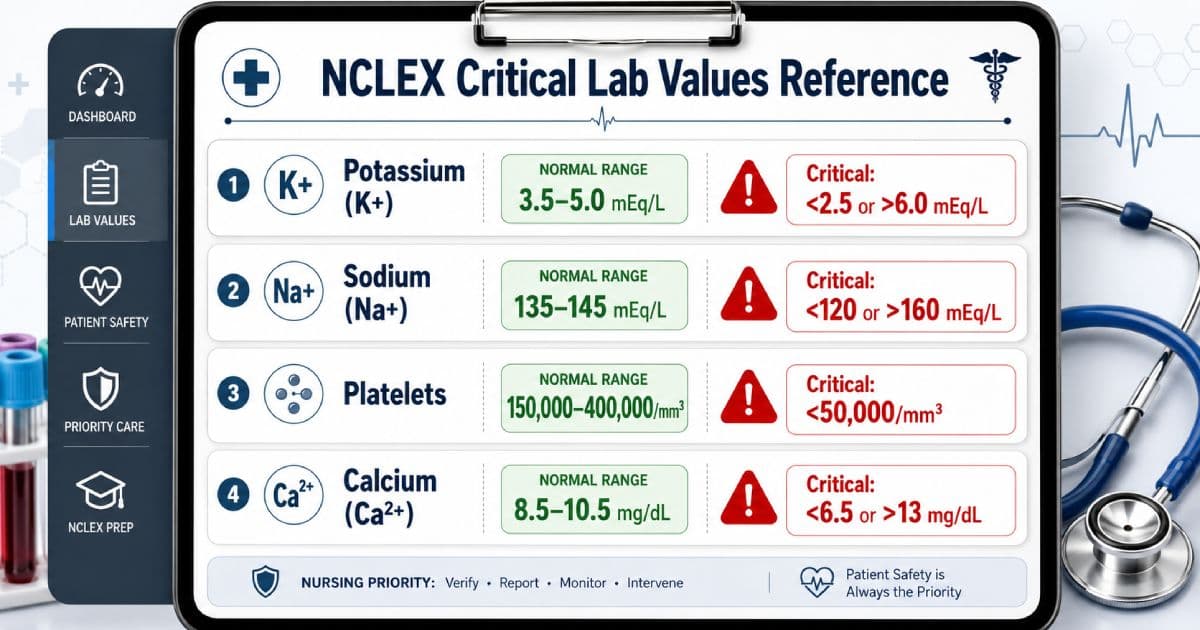
Lab values show up on the NCLEX because nurses use labs to make safe decisions.
The exam is not usually asking, “Can you memorize one number?”
It is asking whether you can recognize a dangerous value, connect it to symptoms, decide what matters most, and choose the safest nursing action.
That matters even more on Next Gen NCLEX case studies.
You may see a chart with vital signs, medication orders, lab reports, urine output, assessment notes, and a provider notification. Your job is to decide which cues are expected, which are abnormal, and which are dangerous.
Before you memorize: lab ranges vary
Normal ranges vary slightly by textbook, hospital, lab machine, age, pregnancy status, and facility policy.
That is normal.
For NCLEX study, use common nursing-school ranges and focus on obvious abnormal values.
The exam usually does not hinge on tiny decimal differences.
It is more likely to test a clear safety problem, such as:
- Potassium 6.4 mEq/L with ECG changes
- Sodium 118 mEq/L with seizure activity
- Platelets 38,000/mm3 with bleeding risk
- Glucose 42 mg/dL with diaphoresis and confusion
- pH 7.19 with respiratory distress
- Hemoglobin 6.8 g/dL with shortness of breath
- INR 5.8 with bruising and warfarin use
How labs connect to NCLEX clinical judgment
The NCSBN Clinical Judgment Measurement Model includes six thinking steps:
- Recognize cues
- Analyze cues
- Prioritize hypotheses
- Generate solutions
- Take action
- Evaluate outcomes
Lab values can appear in every step.
Example
Cue: Potassium 6.3 mEq/L
Analyze cue: Hyperkalemia can cause dangerous dysrhythmias.
Prioritize hypothesis: Cardiac instability risk.
Generate solutions: Place on cardiac monitoring, assess rhythm, hold potassium, prepare ordered treatment.
Take action: Notify provider rapidly after urgent assessment and safety actions.
Evaluate outcomes: Potassium decreases, ECG stabilizes, muscle weakness improves.
For broader NCLEX strategy, review NurseZee’s NCLEX prioritization guide and NCLEX prep guide.
You can also practice lab interpretation with the NurseZee Lab Values Quiz.
The NCLEX lab-value rule: normal, abnormal, dangerous
Do not divide labs into only “normal” and “abnormal.”
Use three levels:
- Normal or expected
- Abnormal but not immediately dangerous
- Critical or dangerous in context
Example
A potassium level of 3.3 mEq/L is low.
A potassium level of 2.6 mEq/L with weakness and PVCs is dangerous.
A potassium level of 6.5 mEq/L with peaked T waves is an emergency.
NCLEX lab values cheat sheet
Use this table as a high-yield starting point.
These are common adult NCLEX study ranges. Always follow the reference range provided by the question or your facility in real practice.
| Lab | Common NCLEX range | Think first | Major red flag |
|---|---|---|---|
| Sodium | 135-145 mEq/L | Neuro and fluid balance | Severe confusion, seizures |
| Potassium | 3.5-5.0 mEq/L | Cardiac rhythm | ECG changes, weakness, dysrhythmias |
| Calcium | 8.5-10.5 mg/dL | Muscles, bones, clotting | Tetany, kidney stones, dysrhythmias |
| Magnesium | 1.3-2.1 mEq/L | Reflexes and respirations | Absent reflexes, respiratory depression |
| Chloride | 96-106 mEq/L | Acid-base and fluid balance | Often follows sodium or acid-base shifts |
| Phosphorus | 2.5-4.5 mg/dL | ATP, bones, renal disease | Opposite calcium trends |
| Glucose fasting | 70-100 mg/dL | Brain fuel | Hypoglycemia below 70 mg/dL |
| BUN | 10-20 mg/dL | Kidney function and hydration | High with dehydration or renal issues |
| Creatinine | 0.6-1.3 mg/dL | Kidney filtration | Rising creatinine before nephrotoxic meds |
| WBC | 4,500-11,000/mm3 | Infection or immune suppression | Neutropenia with fever |
| Platelets | 150,000-400,000/mm3 | Clotting | Below 50,000/mm3 bleeding risk |
| Hemoglobin | Female 12-16 g/dL; male 13-18 g/dL | Oxygen carrying | Around 7 g/dL or symptomatic anemia |
| Hematocrit | Female 36-48%; male 40-55% | RBC concentration | Bleeding, dehydration, anemia |
| PT | about 11-13.5 sec | Extrinsic pathway, warfarin | Prolonged PT with bleeding |
| INR | 0.8-1.1 normal; 2-3 common warfarin target | Warfarin monitoring | INR above target with bleeding risk |
| aPTT | about 25-35 sec | Intrinsic pathway, heparin | Prolonged with bleeding risk |
| pH | 7.35-7.45 | Acidosis vs alkalosis | Below 7.25 or above 7.55 in context |
| PaCO2 | 35-45 mmHg | Respiratory acid | High CO2 = respiratory acidosis pattern |
| HCO3 | 22-26 mEq/L | Metabolic base | Low HCO3 = metabolic acidosis pattern |
| PaO2 | 80-100 mmHg | Oxygenation | Low with respiratory distress |
| SaO2 | 95-100% | Oxygen saturation | Low with distress or altered mental status |
| Lactate | about 0.5-2.2 mmol/L | Perfusion and sepsis | Elevated with shock/sepsis concern |
| Albumin | 3.5-5.0 g/dL | Nutrition, liver, fluid shifts | Low with edema, wounds, poor healing |
| AST | 10-40 units/L | Liver, muscle | High with liver injury pattern |
| ALT | 7-56 units/L | Liver | High with liver injury pattern |
| Total bilirubin | 0.1-1.2 mg/dL | Liver and bile flow | Jaundice, obstruction, liver disease |
| Troponin | Lab-specific; normally very low/negative | Myocardial injury | Elevated with chest pain or ECG changes |
| BNP | Often <100 pg/mL | Heart failure | High with dyspnea/fluid overload |
| Digoxin | 0.5-2.0 ng/mL | Cardiac med safety | Toxicity risk above 2.0 ng/mL |
| Lithium | 0.6-1.2 mEq/L | Mood stabilizer safety | Toxicity risk above 1.5 mEq/L |
What labs should you memorize first?
Do not try to memorize every lab in the hospital.
Start with the labs that change priority decisions.
Memorize these first:
- Potassium
- Sodium
- Glucose
- Calcium
- Magnesium
- WBC and ANC
- Platelets
- Hemoglobin and hematocrit
- BUN and creatinine
- PT/INR and aPTT
- ABGs
- Lactate
- Troponin
- Digoxin and lithium levels
These values come up often because they connect directly to safety.
Fluid and electrolyte lab values
Fluid and electrolytes are high-yield NCLEX content.
They affect the brain, heart, muscles, kidneys, respiratory drive, and medication safety.
Sodium: 135-145 mEq/L
Sodium reflects fluid balance and affects neurologic function.
Think:
Sodium = neuro + water balanceHyponatremia: below 135 mEq/L
Hyponatremia means sodium is low.
Common NCLEX clues:
- Headache
- Confusion
- Lethargy
- Muscle cramps
- Nausea
- Seizures if severe
- Fluid overload or dilutional state
- SIADH
- Diuretic use
Hypernatremia: above 145 mEq/L
Hypernatremia means sodium is high.
Common NCLEX clues:
- Thirst
- Dry mucous membranes
- Restlessness
- Agitation
- Confusion
- Weakness
- Dehydration
- Diabetes insipidus
- Excessive water loss
NCLEX priority clue
New confusion with abnormal sodium matters.
Seizure activity with severe sodium imbalance is urgent.
Example
Which client should the nurse assess first?
- Client with sodium 132 mEq/L and mild nausea
- Client with sodium 119 mEq/L who is difficult to arouse
- Client with sodium 146 mEq/L reporting thirst
- Client with sodium 134 mEq/L taking hydrochlorothiazide
Best answer:
2. Client with sodium 119 mEq/L who is difficult to arouseWhy:
Severe hyponatremia with decreased level of consciousness is a neurologic emergency and can progress to seizures.Potassium: 3.5-5.0 mEq/L
Potassium affects cardiac electrical conduction.
Think:
Potassium = heart rhythmPotassium problems can kill fast.
That is why potassium is one of the most important NCLEX lab values.
Hypokalemia: below 3.5 mEq/L
Common NCLEX clues:
- Muscle weakness
- Fatigue
- Leg cramps
- Constipation
- Ileus
- Shallow respirations if severe
- Dysrhythmias
- Flattened T waves
- ST depression
- Prominent U waves
- Diuretic use
- Vomiting or diarrhea
Hyperkalemia: above 5.0 mEq/L
Common NCLEX clues:
- Muscle weakness
- Paresthesias
- Bradycardia
- Tall peaked T waves
- Widened QRS
- Ventricular dysrhythmias
- Renal failure
- ACE inhibitor or potassium-sparing diuretic use
- Potassium supplements
Potassium medication safety
Watch for potassium shifts with:
- Furosemide
- Hydrochlorothiazide
- Spironolactone
- ACE inhibitors
- ARBs
- Potassium chloride
- Digoxin
- Insulin
- Albuterol
- Renal failure
Example
A client with chronic kidney disease has potassium 6.4 mEq/L and peaked T waves. Which action is the priority?
- Encourage foods high in potassium
- Place the client on continuous cardiac monitoring
- Document the finding as expected
- Administer oral potassium chloride
Best answer:
2. Place the client on continuous cardiac monitoringWhy:
Hyperkalemia with ECG changes can cause fatal dysrhythmias. Cardiac monitoring and rapid escalation are priority safety actions. Potassium replacement is unsafe.Calcium: 8.5-10.5 mg/dL
Calcium affects bones, muscles, nerve transmission, clotting, and cardiac function.
Think:
Calcium = bones, stones, muscle tone, and clottingHypocalcemia: below 8.5 mg/dL
Common NCLEX clues:
- Tingling around mouth
- Numbness
- Muscle cramps
- Tetany
- Positive Chvostek sign
- Positive Trousseau sign
- Laryngospasm risk
- Seizures
- Prolonged QT interval
- Post-thyroidectomy complication
Hypercalcemia: above 10.5 mg/dL
Common NCLEX clues:
- Muscle weakness
- Fatigue
- Constipation
- Kidney stones
- Bone pain
- Confusion
- Shortened QT interval
- Dehydration
- Malignancy
- Hyperparathyroidism
Post-thyroidectomy red flag
Tingling around the mouth after thyroidectomy is not a small complaint.
It may suggest hypocalcemia related to parathyroid injury.
Example
A client is 8 hours post-thyroidectomy and reports tingling around the lips. Which finding is most concerning?
- Calcium 7.2 mg/dL
- Temperature 37.2°C
- Pain 4/10 at incision
- Small amount of serosanguineous drainage
Best answer:
1. Calcium 7.2 mg/dLWhy:
Low calcium with perioral tingling after thyroidectomy suggests hypocalcemia and possible neuromuscular irritability. The nurse should assess for tetany and escalate care.Magnesium: 1.3-2.1 mEq/L
Magnesium affects neuromuscular transmission, cardiac rhythm, and uterine relaxation.
Think:
Magnesium = reflexes and respirationsHypomagnesemia: below 1.3 mEq/L
Common NCLEX clues:
- Hyperactive deep tendon reflexes
- Tremors
- Muscle cramps
- Seizures
- Confusion
- Dysrhythmias
- Torsades de pointes risk
- Alcohol use disorder
- Diarrhea
- Poor nutrition
Hypermagnesemia: above 2.1 mEq/L
Common NCLEX clues:
- Hypoactive or absent deep tendon reflexes
- Muscle weakness
- Flushing
- Bradycardia
- Hypotension
- Respiratory depression
- Decreased level of consciousness
- Renal failure
- Magnesium sulfate therapy
Magnesium sulfate NCLEX clue
In OB questions, magnesium sulfate is used for seizure prevention in preeclampsia.
Toxicity signs include:
- Respiratory depression
- Absent DTRs
- Decreased urine output
- Low level of consciousness
Antidote:
Calcium gluconateExample
A client receiving magnesium sulfate has respirations 10/min, absent patellar reflexes, and urine output 20 mL/hr. What should the nurse do first?
- Continue the infusion and reassess in one hour
- Stop the magnesium infusion and notify the provider
- Encourage oral fluids
- Place the client in a supine position
Best answer:
2. Stop the magnesium infusion and notify the providerWhy:
Absent reflexes, respiratory depression, and low urine output suggest magnesium toxicity. The infusion should be stopped and emergency management initiated according to protocol.Chloride: 96-106 mEq/L
Chloride helps maintain fluid balance and acid-base balance.
NCLEX usually tests chloride less often than sodium, potassium, calcium, and magnesium.
But chloride may appear with:
- Dehydration
- Vomiting
- Diarrhea
- Metabolic alkalosis
- Metabolic acidosis
- IV fluid changes
Hypochloremia
Low chloride may occur with prolonged vomiting or gastric suction.
Look for metabolic alkalosis patterns.
Hyperchloremia
High chloride may occur with dehydration, renal problems, or excess normal saline.
Look for metabolic acidosis patterns.
Phosphorus: 2.5-4.5 mg/dL
Phosphorus helps with ATP, bones, red blood cell function, and acid-base balance.
Phosphorus and calcium often move opposite each other.
Think:
Phosphorus and calcium often have an inverse relationship.Hypophosphatemia
Common clues:
- Muscle weakness
- Respiratory weakness
- Confusion
- Rhabdomyolysis risk
- Refeeding syndrome
- Alcohol use disorder
Hyperphosphatemia
Common clues:
- Chronic kidney disease
- Hypocalcemia symptoms
- Muscle cramps
- Tetany
- Calcium-phosphate deposits
Glucose and diabetes lab values
Glucose labs are common because hypoglycemia can harm the brain quickly.
Fasting glucose: 70-100 mg/dL
A common NCLEX fasting glucose range is:
70-100 mg/dLHypoglycemia: below 70 mg/dL
Hypoglycemia is usually more urgent than moderate hyperglycemia.
Common clues:
- Diaphoresis
- Shakiness
- Hunger
- Tachycardia
- Irritability
- Confusion
- Weakness
- Seizures
- Loss of consciousness
Hyperglycemia
Common clues:
- Polyuria
- Polydipsia
- Polyphagia
- Fatigue
- Dry mucous membranes
- Blurred vision
- Fruity breath if DKA
- Kussmaul respirations if DKA
- Ketones if DKA
DKA lab pattern
DKA often includes:
- High glucose
- Positive ketones
- Metabolic acidosis
- Low pH
- Low bicarbonate
- Dehydration
- Potassium shifts
Important potassium point:
Serum potassium may look normal or high in DKA before treatment, but total body potassium is often depleted.
Insulin drives potassium into cells, so potassium can drop quickly during treatment.
HHS lab pattern
HHS often includes:
- Very high glucose
- Severe dehydration
- High serum osmolality
- Little or no ketosis compared with DKA
- Altered mental status
A1C
A1C reflects average blood glucose over about 2 to 3 months.
Common interpretation:
| A1C | Meaning |
|---|---|
| Below 5.7% | Normal range |
| 5.7%-6.4% | Prediabetes range |
| 6.5% or higher | Diabetes range |
| Around 7% or individualized | Common treatment goal for many adults with diabetes |
NCLEX is more likely to test whether you know A1C reflects long-term control than whether you can recall every diagnostic threshold.
Example
A client with diabetes is sweaty, shaky, and confused. Capillary glucose is 48 mg/dL. What should the nurse do first?
- Give regular insulin according to sliding scale
- Provide a fast-acting carbohydrate if the client can swallow safely
- Teach the client about A1C goals
- Document the finding and recheck in four hours
Best answer:
2. Provide a fast-acting carbohydrate if the client can swallow safelyWhy:
The client has symptomatic hypoglycemia. If awake and able to swallow, immediate fast-acting carbohydrate is the priority. If not safe to swallow, follow emergency hypoglycemia protocol.Renal function lab values
Renal labs matter because kidneys affect fluid balance, electrolytes, medication clearance, and acid-base balance.
BUN: 10-20 mg/dL
BUN stands for blood urea nitrogen.
It can rise with:
- Dehydration
- Kidney dysfunction
- High protein intake
- GI bleeding
- Catabolic states
BUN can be influenced by hydration status, so do not interpret it alone.
Creatinine: 0.6-1.3 mg/dL
Creatinine is often a better kidney filtration clue than BUN.
A rising creatinine is important before giving medications that affect the kidneys.
Examples:
- Vancomycin
- Gentamicin
- NSAIDs
- ACE inhibitors in some contexts
- IV contrast
- Some antivirals
- Some chemotherapy agents
NCLEX safety clue
If the question gives an elevated creatinine and an order for a nephrotoxic medication, expect a safety decision.
Example
The nurse reviews morning labs for a client scheduled for a CT scan with contrast. Creatinine increased from 0.9 mg/dL to 2.1 mg/dL. What should the nurse do?
- Prepare the client for transport without further action
- Encourage the client to restrict fluids
- Notify the provider before contrast administration
- Administer potassium chloride before the scan
Best answer:
3. Notify the provider before contrast administrationWhy:
A rising creatinine suggests reduced kidney function. Contrast exposure may increase renal risk, so the nurse should clarify the plan before proceeding.Urine output
Urine output is not a blood lab, but it is a major renal perfusion clue.
Common NCLEX minimum adult target:
At least 30 mL/hrDecreased urine output may suggest:
- Hypovolemia
- Shock
- Acute kidney injury
- Obstruction
- Poor perfusion
- Magnesium toxicity risk in OB questions
Hematology lab values
CBC results help you recognize infection risk, bleeding risk, oxygen-carrying capacity, and anemia.
WBC: 4,500-11,000/mm3
White blood cells help fight infection.
Low WBC: leukopenia
Low WBC may mean immunosuppression.
Common causes:
- Chemotherapy
- Bone marrow suppression
- Severe infection
- Some medications
- Autoimmune disease
High WBC: leukocytosis
High WBC may mean:
- Infection
- Inflammation
- Steroid use
- Stress response
- Leukemia or blood disorder
ANC: neutrophil safety
ANC stands for absolute neutrophil count.
It is more specific than total WBC for infection risk.
Common NCLEX interpretation:
| ANC | Meaning |
|---|---|
| Above 1,500/mm3 | Usually acceptable |
| 1,000-1,500/mm3 | Mild neutropenia |
| 500-1,000/mm3 | Moderate neutropenia |
| Below 500/mm3 | Severe neutropenia, high infection risk |
Neutropenia precautions
Expect actions such as:
- Hand hygiene
- Private room if required by policy
- Avoid sick visitors
- Avoid fresh flowers or standing water if facility policy says so
- Avoid raw or undercooked foods if neutropenic diet is ordered
- Monitor temperature
- Report fever promptly
- Avoid rectal temperatures or suppositories
NCLEX red flag
Fever in a neutropenic client is urgent.
Example
A client receiving chemotherapy has ANC 420/mm3 and temperature 38.4°C. What should the nurse do first?
- Apply warm blankets
- Notify the provider promptly according to protocol
- Give fresh fruit to increase vitamins
- Take a rectal temperature for accuracy
Best answer:
2. Notify the provider promptly according to protocolWhy:
Severe neutropenia with fever is a medical emergency because the client may not mount a strong immune response. Fresh fruit and rectal temperature are not appropriate choices.Platelets: 150,000-400,000/mm3
Platelets help the blood clot.
Thrombocytopenia: below 150,000/mm3
Common clues:
- Petechiae
- Bruising
- Bleeding gums
- Nosebleeds
- Hematuria
- Melena
- Heavy menstrual bleeding
- Prolonged bleeding
Platelet red flags
| Platelet count | Nursing concern |
|---|---|
| 100,000-150,000/mm3 | Mild thrombocytopenia; monitor trend |
| 50,000-100,000/mm3 | Increased bleeding risk |
| Below 50,000/mm3 | Significant bleeding risk; precautions |
| Below 20,000/mm3 | High risk for spontaneous bleeding |
Bleeding precautions
Expected nursing actions may include:
- Use soft toothbrush
- Use electric razor
- Avoid IM injections if possible
- Apply pressure longer after venipuncture
- Avoid rectal temperatures and suppositories
- Monitor stool and urine for blood
- Implement fall prevention
- Avoid aspirin and NSAIDs unless specifically ordered
Example
A client’s platelet count is 38,000/mm3. Which instruction is most appropriate?
- Use a hard-bristle toothbrush to remove plaque
- Shave with an electric razor
- Take aspirin for headache
- Increase contact sports to build strength
Best answer:
2. Shave with an electric razorWhy:
A platelet count below 50,000/mm3 increases bleeding risk. An electric razor helps reduce cuts. Aspirin, hard-bristle toothbrushes, and contact sports increase bleeding risk.Hemoglobin and hematocrit
Hemoglobin carries oxygen.
Hematocrit reflects the percentage of blood volume made up of red blood cells.
Common ranges:
| Lab | Female adult | Male adult |
|---|---|---|
| Hemoglobin | 12-16 g/dL | 13-18 g/dL |
| Hematocrit | 36-48% | 40-55% |
Low hemoglobin or hematocrit
Think anemia or blood loss.
Common clues:
- Fatigue
- Pallor
- Shortness of breath
- Dizziness
- Tachycardia
- Hypotension if bleeding
- Chest pain in high-risk clients
High hemoglobin or hematocrit
Think dehydration, polycythemia, chronic hypoxia, or high altitude.
Hemoglobin red flag
Many hospital protocols use hemoglobin around 7 g/dL as a common transfusion consideration in stable adults, but the clinical picture matters.
A client with active bleeding, chest pain, shock, or severe symptoms may need faster action.
Example
Which client should the nurse assess first?
- Client with hemoglobin 10.8 g/dL and chronic kidney disease
- Client with hemoglobin 6.6 g/dL, dizziness, and HR 124
- Client with hematocrit 36% after IV fluids
- Client with WBC 11,200/mm3 after surgery
Best answer:
2. Client with hemoglobin 6.6 g/dL, dizziness, and HR 124Why:
Low hemoglobin with symptoms and tachycardia suggests poor oxygen-carrying capacity and possible hemodynamic compromise.Coagulation lab values
Coagulation labs matter when clients take anticoagulants, bleed, clot, have liver disease, or need procedures.
PT: about 11-13.5 seconds
PT measures the extrinsic clotting pathway.
It is commonly used with INR to monitor warfarin therapy.
INR
Common ranges:
| INR | Meaning |
|---|---|
| 0.8-1.1 | Normal for many adults not on warfarin |
| 2.0-3.0 | Common therapeutic range for many warfarin indications |
| 2.5-3.5 | May be used for some mechanical valve situations |
| Above ordered target | Increased bleeding risk |
Warfarin red flags
Watch for:
- Bruising
- Bleeding gums
- Nosebleeds
- Black stools
- Hematuria
- Severe headache
- Falls or head injury
- INR above therapeutic range
Antidote often tested:
Vitamin KaPTT: about 25-35 seconds
aPTT measures the intrinsic clotting pathway.
It is commonly used to monitor unfractionated heparin therapy.
Therapeutic heparin range is often described as:
1.5-2.5 times controlAlways use the facility range or the range in the question.
Heparin red flags
Watch for:
- Bleeding
- aPTT above therapeutic range
- Low platelets suggesting possible HIT
- New thrombosis while receiving heparin
Antidote often tested:
Protamine sulfateHIT: heparin-induced thrombocytopenia
HIT is a serious immune reaction to heparin.
NCLEX clues:
- Platelets drop after heparin exposure
- New clotting despite low platelets
- Thrombosis signs
- Heparin therapy in recent days
This is not routine mild thrombocytopenia.
It requires rapid follow-up.
Example
A client taking warfarin has INR 5.6 and reports black stools. What should the nurse do first?
- Tell the client this is expected with warfarin
- Hold the next dose without documenting
- Assess for bleeding and notify the provider promptly
- Encourage high-dose aspirin for pain
Best answer:
3. Assess for bleeding and notify the provider promptlyWhy:
INR 5.6 is above the common therapeutic range, and black stools may indicate GI bleeding. This requires prompt assessment and escalation.Arterial blood gas values
ABGs are intimidating until you use a consistent method.
Common NCLEX ABG ranges:
| ABG value | Normal range | What it tells you |
|---|---|---|
| pH | 7.35-7.45 | Acidic or alkalotic blood |
| PaCO2 | 35-45 mmHg | Respiratory component |
| HCO3 | 22-26 mEq/L | Metabolic component |
| PaO2 | 80-100 mmHg | Oxygen in arterial blood |
| SaO2 | 95-100% | Oxygen saturation |
Step-by-step ABG method
Use this sequence:
- Look at pH.
- Decide acidosis or alkalosis.
- Look at PaCO2.
- Look at HCO3.
- Decide respiratory or metabolic.
- Check compensation.
- Connect it to the client.
ROME mnemonic
ROME means:
Respiratory Opposite
Metabolic Equal
For respiratory problems, pH and PaCO2 move in opposite directions.
For metabolic problems, pH and HCO3 move in the same direction.
Respiratory acidosis
Pattern:
Low pH, high PaCO2Common causes:
- COPD exacerbation
- Opioid overdose
- Respiratory depression
- Airway obstruction
- Severe pneumonia
- Hypoventilation
Common symptoms:
- Headache
- Confusion
- Drowsiness
- Hypoventilation
- Warm flushed skin
- Respiratory distress
Example
pH 7.28
PaCO2 58 mmHg
HCO3 24 mEq/L
Interpretation:
Respiratory acidosisWhy:
The pH is low and the PaCO2 is high. The respiratory value is moving opposite the pH.Respiratory alkalosis
Pattern:
High pH, low PaCO2Common causes:
- Anxiety or panic with hyperventilation
- Pain
- Fever
- Early sepsis
- Pregnancy
- Mechanical ventilation settings
- Pulmonary embolism
Common symptoms:
- Lightheadedness
- Tingling around mouth
- Numbness
- Chest tightness
- Palpitations
- Hyperventilation
Example
pH 7.50
PaCO2 29 mmHg
HCO3 24 mEq/L
Interpretation:
Respiratory alkalosisWhy:
The pH is high and PaCO2 is low. The respiratory value is moving opposite the pH.Metabolic acidosis
Pattern:
Low pH, low HCO3Common causes:
- DKA
- Shock
- Sepsis
- Kidney failure
- Severe diarrhea
- Lactic acidosis
Common symptoms:
- Kussmaul respirations
- Confusion
- Hypotension
- Dysrhythmias
- Weakness
Example
pH 7.25
PaCO2 38 mmHg
HCO3 16 mEq/L
Interpretation:
Metabolic acidosisWhy:
The pH is low and bicarbonate is low. The metabolic value moves in the same direction as pH.Metabolic alkalosis
Pattern:
High pH, high HCO3Common causes:
- Vomiting
- Gastric suction
- Diuretic use
- Excess antacid or bicarbonate
Common symptoms:
- Confusion
- Muscle cramps
- Hypokalemia clues
- Shallow respirations as compensation
Example
pH 7.49
PaCO2 42 mmHg
HCO3 32 mEq/L
Interpretation:
Metabolic alkalosisWhy:
The pH is high and bicarbonate is high. The metabolic value moves in the same direction as pH.Compensation
Compensation means the body is trying to correct the acid-base imbalance.
Uncompensated
The pH is abnormal, and only one system is abnormal.
pH abnormal
PaCO2 or HCO3 abnormal
Other value normal
Partially compensated
The pH is still abnormal, but both PaCO2 and HCO3 are abnormal.
pH abnormal
PaCO2 abnormal
HCO3 abnormal
Fully compensated
The pH is back within normal range, but PaCO2 and HCO3 are abnormal.
pH normal but leaning acidic or alkalotic
PaCO2 abnormal
HCO3 abnormalCardiac lab values
Cardiac labs matter because they can signal myocardial injury or heart failure.
Troponin
Troponin is a key marker for myocardial injury.
Normal ranges vary by assay and lab.
For NCLEX, know this:
Troponin should be very low or negative. Elevated troponin with chest pain is a red flag.Troponin red flags
- Chest pain or pressure
- Shortness of breath
- Diaphoresis
- Nausea
- Radiating pain
- ECG changes
- New troponin elevation
- Rising troponin trend
NCLEX priority point
A rising troponin trend is more concerning than a single borderline value without symptoms.
BNP
BNP can increase when the heart is stretched, often with heart failure.
Common NCLEX-friendly idea:
BNP less than 100 pg/mL is often considered unlikely for heart failure in many contexts.A high BNP plus dyspnea, crackles, edema, weight gain, and orthopnea supports heart failure.
Example
Which finding requires immediate follow-up in a client with chest pressure?
- Troponin elevated above the lab reference range
- Sodium 138 mEq/L
- WBC 8,000/mm3
- Platelets 230,000/mm3
Best answer:
1. Troponin elevated above the lab reference rangeWhy:
Elevated troponin with chest pressure suggests myocardial injury and requires prompt assessment and escalation.Liver and nutrition lab values
Liver and nutrition labs can appear in questions about bleeding risk, medication metabolism, edema, nutrition, and alcohol use.
Albumin: 3.5-5.0 g/dL
Albumin is a protein made by the liver.
Low albumin may occur with:
- Poor nutrition
- Liver disease
- Kidney disease
- Inflammation
- Burns
- Chronic illness
Low albumin can contribute to:
- Edema
- Poor wound healing
- Pressure injury risk
- Medication-binding changes
AST and ALT
Common ranges:
| Lab | Common range | Main use |
|---|---|---|
| AST | 10-40 units/L | Liver, muscle, cardiac tissue |
| ALT | 7-56 units/L | More liver-specific than AST |
Elevated AST and ALT may suggest liver injury.
NCLEX often ties liver labs to medication safety.
Examples:
- Acetaminophen toxicity
- Hepatitis
- Cirrhosis
- Alcohol-related liver disease
- Statin monitoring in some contexts
Bilirubin: 0.1-1.2 mg/dL
High bilirubin may cause jaundice.
Think:
- Liver disease
- Bile duct obstruction
- Hemolysis
- Newborn jaundice
Liver disease red flags
Clients with liver disease may have:
- Elevated bilirubin
- Elevated AST/ALT
- Low albumin
- Prolonged PT/INR
- Ascites
- Jaundice
- Confusion from hepatic encephalopathy
- Bleeding risk
Therapeutic drug levels
NCLEX loves medication safety.
You do not need every drug level in pharmacology.
Know the high-yield toxicity patterns.
Digoxin: 0.5-2.0 ng/mL
Many nursing resources teach:
Digoxin therapeutic range: 0.5-2.0 ng/mLSome heart failure targets may be lower in practice, but NCLEX commonly tests toxicity above 2.0 ng/mL.
Digoxin toxicity clues
- Nausea
- Vomiting
- Anorexia
- Confusion
- Weakness
- Bradycardia
- Dysrhythmias
- Visual changes such as yellow halos
Digoxin and potassium
Hypokalemia increases risk of digoxin toxicity.
NCLEX clue:
Digoxin + low potassium = toxicity riskExample
A client taking digoxin has potassium 3.0 mEq/L and reports nausea and seeing yellow halos. What should the nurse do?
- Administer the next digoxin dose as scheduled
- Hold digoxin and notify the provider
- Encourage high-sodium foods
- Document as expected medication effect
Best answer:
2. Hold digoxin and notify the providerWhy:
Low potassium increases digoxin toxicity risk. Nausea and visual changes are classic toxicity clues.Lithium: 0.6-1.2 mEq/L
Lithium has a narrow therapeutic range.
Toxicity risk rises with dehydration, sodium depletion, kidney dysfunction, and medication interactions.
Lithium toxicity clues
- Coarse tremor
- Vomiting
- Diarrhea
- Confusion
- Ataxia
- Slurred speech
- Seizures
- Severe sedation
Lithium teaching
Important teaching points:
- Maintain consistent sodium intake
- Maintain hydration
- Avoid dehydration
- Report vomiting or diarrhea
- Avoid NSAIDs unless approved
- Keep lab appointments
Phenytoin: 10-20 mcg/mL
Phenytoin is an antiseizure medication.
Toxicity clues:
- Nystagmus
- Ataxia
- Slurred speech
- Confusion
- Sedation
- Gingival hyperplasia with long-term use
Theophylline: 10-20 mcg/mL
Theophylline is less commonly used than older NCLEX prep materials suggest, but it still appears in some study resources.
Toxicity clues:
- Nausea
- Vomiting
- Restlessness
- Tachycardia
- Dysrhythmias
- Seizures
Vancomycin
Vancomycin monitoring depends on the clinical situation and facility protocol.
Modern practice often uses AUC-based monitoring instead of only trough values.
For NCLEX, focus on safety cues:
- Kidney function
- Hearing changes
- Infusion reactions
- Culture results
- Trough/AUC monitoring if provided in the question
NCLEX red flags by lab category
This section helps you decide what matters first.
Electrolyte red flags
Prioritize:
- Potassium above 6.0 mEq/L
- Potassium below 3.0 mEq/L with symptoms or ECG changes
- Sodium below 120 mEq/L with neuro changes
- Sodium above 155 mEq/L with severe dehydration or neuro changes
- Calcium below 7.5 mg/dL with tetany or laryngospasm risk
- Calcium above 12 mg/dL with confusion or dysrhythmias
- Magnesium toxicity signs during magnesium sulfate therapy
Infection red flags
Prioritize:
- Fever in a neutropenic client
- Elevated lactate with infection signs
- WBC trend rising with tachycardia and hypotension
- New confusion in an older adult with infection
- Positive blood cultures with shock signs
Bleeding red flags
Prioritize:
- Platelets below 50,000/mm3 with bleeding risk
- INR above therapeutic range with bleeding
- aPTT above therapeutic range with heparin and bleeding
- Hemoglobin dropping rapidly
- Black stools, hematuria, hematemesis, or severe bruising
Respiratory and acid-base red flags
Prioritize:
- pH below 7.25 or above 7.55 in context
- PaCO2 rising with decreased level of consciousness
- PaO2 low with distress
- Respiratory acidosis after opioid administration
- Metabolic acidosis with DKA or shock
Cardiac red flags
Prioritize:
- Elevated troponin with chest pain
- Potassium abnormality with ECG changes
- Digoxin toxicity symptoms
- BNP elevation with severe respiratory distress
- Lactate elevation with shock signs
How to answer NCLEX lab-value questions
Use this method.
Step 1: Identify the abnormal value
Mark the lab as:
Low, normal, or highDo not stop there.
Step 2: Connect the lab to the body system
Ask:
Which organ or safety issue does this lab affect?Examples:
- Potassium → heart rhythm
- Sodium → brain and fluid balance
- Platelets → bleeding
- WBC/ANC → infection risk
- Creatinine → kidney function and medication clearance
- pH/PaCO2/HCO3 → acid-base and respiratory/metabolic status
Step 3: Check symptoms and trends
A value is more important when it matches symptoms.
Examples:
- Potassium 6.2 plus peaked T waves
- Platelets 42,000 plus bleeding gums
- ANC 400 plus fever
- Glucose 48 plus confusion
- pH 7.21 plus Kussmaul respirations
Trends also matter.
A creatinine rising from 0.8 to 2.0 is more concerning than one stable mildly abnormal value.
Step 4: Decide priority
Use NCLEX priority rules:
- Airway
- Breathing
- Circulation
- Neuro changes
- Bleeding
- Sepsis
- Safety
- Medication toxicity
- Unexpected or worsening trends
Step 5: Choose the nursing action
Possible first actions include:
- Assess the client
- Recheck vital signs
- Place on cardiac monitoring
- Hold an unsafe medication
- Treat hypoglycemia
- Implement bleeding precautions
- Implement neutropenic precautions
- Notify provider after assessment or urgent safety action
- Prepare ordered treatment
- Reassess after intervention
Step 6: Avoid common wrong answers
Usually avoid answers that:
- Document only
- Teach during an emergency
- Delay care for nonurgent tasks
- Ignore symptoms
- Treat the number without assessing the client
- Give potassium to a client with hyperkalemia
- Give insulin to a client with hypoglycemia
- Give aspirin to a client with severe thrombocytopenia
- Ambulate a client with severe hypoxia
- Continue a medication despite toxicity signs
What to do with critical labs on NCLEX
Critical values often require fast action.
But “fast action” does not always mean “call the provider first.”
Sometimes the nurse must act immediately within scope.
Assess first when you need data
Choose assessment first when:
- The client is not in immediate danger
- You need symptoms or vital signs before deciding
- The question asks for the nurse’s first action after seeing a lab
- The answer option is a focused assessment connected to the lab
Example:
Assess heart rhythm for abnormal potassium.
Assess bleeding for low platelets.
Assess respiratory status for abnormal ABG.
Assess mental status for abnormal sodium.
Intervene first when safety is immediate
Choose action first when:
- Glucose is dangerously low and the client is symptomatic
- Airway or breathing is compromised
- A dangerous infusion or medication must be stopped
- Severe bleeding is present
- The client is actively seizing
- The client has a life-threatening rhythm or unstable vital signs
Notify provider after urgent assessment or safety action
NCLEX often expects provider notification when a lab is critical.
But do not skip nursing actions.
Example:
A client has potassium 6.7 mEq/L and ECG changes.
The nurse should assess rhythm, initiate cardiac monitoring if not already in place, hold potassium sources, and notify the provider rapidly according to protocol.Lab values and prioritization
Lab questions often ask which client to see first.
Use the same logic as other priority questions.
For more practice, review the NCLEX prioritization guide.
See first
Choose the client with:
- Potassium 6.4 mEq/L and ECG changes
- Glucose 42 mg/dL and confusion
- Sodium 118 mEq/L and seizure activity
- Platelets 28,000/mm3 and bleeding
- ANC 350/mm3 and fever
- pH 7.18 and respiratory distress
- Troponin elevation and chest pain
- Lactate elevated with hypotension and infection
- Creatinine rising before a nephrotoxic medication
- Digoxin level high with bradycardia and nausea
Can usually wait
A client may be lower priority if:
- The lab is mildly abnormal and expected
- The client is asymptomatic
- The lab is stable from baseline
- The provider is already treating it
- Another client has an acute red flag
Examples:
- Sodium 133 mEq/L with no symptoms
- WBC 11,200/mm3 after surgery with stable vitals
- Hemoglobin 10.5 g/dL in chronic anemia without symptoms
- Glucose 165 mg/dL after eating when another client is hypoglycemic
Lab values and medication safety
Lab values often decide whether a medication is safe.
Potassium and medications
Hold or question medication if:
- Potassium is high and the order is potassium chloride
- Potassium is high and the client takes spironolactone, ACE inhibitor, or ARB
- Potassium is low and the client takes digoxin
- Potassium is low and the client has dysrhythmias
Creatinine and medications
Question nephrotoxic medications when creatinine is rising.
Watch:
- Aminoglycosides
- Vancomycin
- NSAIDs
- IV contrast
- Some antivirals
- Some chemotherapy medications
INR/aPTT and anticoagulants
Question or hold per protocol if:
- INR is above target with warfarin
- aPTT is above target with heparin
- The client is bleeding
- Platelets drop sharply on heparin
Liver labs and medications
Question hepatotoxic medications when liver injury is suspected.
Watch:
- Acetaminophen
- Some antitubercular medications
- Some anticonvulsants
- Some statins in certain contexts
- Alcohol use plus hepatotoxic meds
Glucose and insulin
Always check blood glucose before giving rapid-acting or short-acting insulin when required by policy.
Hold and clarify if the glucose is low or the client is not eating and the order seems unsafe.
Example
The nurse reviews these orders. Which order should the nurse question?
- Potassium chloride for potassium 2.9 mEq/L
- Regular insulin for glucose 348 mg/dL
- Warfarin for INR 6.2 and active nosebleed
- Oxygen for SpO2 88%
Best answer:
3. Warfarin for INR 6.2 and active nosebleedWhy:
INR 6.2 is above the common therapeutic range, and the client has active bleeding. Giving warfarin would increase bleeding risk.Lab values by body system
Respiratory system
High-yield labs:
- ABGs
- PaO2
- SaO2
- CO2/bicarbonate
- WBC
- Lactate if sepsis concern
Red flags:
- Low pH with high PaCO2
- Low PaO2 with distress
- Rising PaCO2 with drowsiness
- WBC high with fever and respiratory symptoms
Cardiac system
High-yield labs:
- Potassium
- Magnesium
- Calcium
- Troponin
- BNP
- PT/INR if anticoagulated
- aPTT if receiving heparin
Red flags:
- Potassium abnormality with ECG changes
- Low magnesium with ventricular dysrhythmias
- Elevated troponin with chest pain
- INR above target with bleeding
Renal system
High-yield labs:
- BUN
- Creatinine
- Potassium
- Sodium
- Phosphorus
- Calcium
- Urine output
Red flags:
- Rising creatinine
- Hyperkalemia
- Decreased urine output
- Fluid overload symptoms
- Medication toxicity risk
Endocrine system
High-yield labs:
- Glucose
- A1C
- Ketones
- Sodium
- Potassium
- Calcium
- TSH/T4 in thyroid questions
Red flags:
- Hypoglycemia with symptoms
- DKA pattern
- HHS pattern
- Thyroid storm symptoms
- Myxedema coma symptoms
Hematology and oncology
High-yield labs:
- WBC
- ANC
- Hemoglobin
- Hematocrit
- Platelets
- PT/INR
- aPTT
Red flags:
- ANC below 500 with fever
- Platelets below 50,000/mm3
- Hemoglobin around 7 g/dL or symptomatic
- Active bleeding with abnormal coagulation labs
OB and maternity
High-yield labs:
- Magnesium
- Platelets
- AST/ALT
- Urine protein
- Creatinine
- Hemoglobin/hematocrit
- Rh status
- Glucose screening
Red flags:
- Magnesium toxicity signs
- Low platelets with preeclampsia/HELLP concern
- Elevated liver enzymes with right upper quadrant pain
- Severe-range blood pressure with symptoms
- Heavy bleeding postpartum
Pediatrics
Pediatric lab values may differ from adult ranges.
NCLEX usually gives enough context.
Common pediatric lab-related topics:
- Dehydration and electrolytes
- Glucose problems
- Newborn bilirubin
- Lead levels
- Infection markers
- Sickle cell anemia labs
- DKA labs
ABG practice shortcut table
| Disorder | pH | PaCO2 | HCO3 | Common NCLEX cause |
|---|---|---|---|---|
| Respiratory acidosis | Low | High | Normal or high if compensated | COPD, opioid overdose, hypoventilation |
| Respiratory alkalosis | High | Low | Normal or low if compensated | Anxiety, pain, hyperventilation, early PE |
| Metabolic acidosis | Low | Normal or low if compensated | Low | DKA, diarrhea, renal failure, shock |
| Metabolic alkalosis | High | Normal or high if compensated | High | Vomiting, suctioning, diuretics |
Mini practice
ABG 1
pH 7.30
PaCO2 52 mmHg
HCO3 24 mEq/L
Answer:
Respiratory acidosisRationale:
The pH is low and PaCO2 is high. The respiratory component is causing the acidosis.ABG 2
pH 7.48
PaCO2 32 mmHg
HCO3 24 mEq/L
Answer:
Respiratory alkalosisRationale:
The pH is high and PaCO2 is low. The client is blowing off CO2.ABG 3
pH 7.24
PaCO2 39 mmHg
HCO3 15 mEq/L
Answer:
Metabolic acidosisRationale:
The pH is low and HCO3 is low. The metabolic component matches the pH direction.ABG 4
pH 7.51
PaCO2 44 mmHg
HCO3 34 mEq/L
Answer:
Metabolic alkalosisRationale:
The pH is high and HCO3 is high. This pattern may occur with vomiting, gastric suctioning, or diuretics.Common NCLEX lab traps
Trap 1: Memorizing numbers without symptoms
Do not only memorize.
Connect the lab to the client.
Example:
A potassium of 5.3 mEq/L is high.
A potassium of 5.3 mEq/L in a stable chronic kidney disease client may be less urgent than glucose 38 mg/dL with confusion.
Trap 2: Treating mild abnormal labs as emergencies
NCLEX often includes several abnormal values.
Not every abnormal value is the priority.
Ask:
Which abnormal value is most dangerous right now?Trap 3: Ignoring trends
A “normal” value may still matter if the trend is moving fast.
Example:
Hemoglobin dropping from 13.2 to 9.1 after surgery matters even if 9.1 is not the lowest number you have seen.
Trap 4: Forgetting medication context
A lab may be safe for one client and unsafe for another.
Examples:
- Potassium 3.2 in a client taking digoxin
- INR 4.9 in a client taking warfarin
- Creatinine 2.4 before IV contrast
- Platelets dropping after heparin
Trap 5: Calling the provider before nursing assessment
Provider notification is important.
But NCLEX often expects the nurse to gather relevant assessment data first if the client is stable enough.
Example:
For a potassium abnormality, assess cardiac rhythm and symptoms.
For thrombocytopenia, assess bleeding.
For sodium abnormality, assess neurologic status.
Trap 6: Choosing education during an emergency
Teaching is rarely the first answer when the client has:
- Severe hypoglycemia
- Respiratory distress
- Active bleeding
- Dysrhythmia risk
- Seizure
- Shock
- Severe lab abnormality with symptoms
Trap 7: Assuming NCLEX wants the rarest disease
NCLEX usually tests safe nursing judgment, not obscure diagnoses.
A simple answer may be correct:
Assess the client.
Hold the unsafe medication.
Treat hypoglycemia.
Place on cardiac monitoring.
Notify the provider.
Reassess after intervention.
NCLEX practice questions: lab values
Question 1
The nurse reviews morning labs for four clients. Which client should the nurse assess first?
- Client with sodium 133 mEq/L and no symptoms
- Client with potassium 6.3 mEq/L and peaked T waves
- Client with hemoglobin 10.9 g/dL and chronic anemia
- Client with WBC 11,500/mm3 after surgery
Answer
2. Client with potassium 6.3 mEq/L and peaked T wavesRationale
Hyperkalemia with ECG changes is a cardiac emergency. The nurse should assess and initiate rapid safety actions according to protocol.Question 2
A client with diabetes is awake, sweating, and reports feeling shaky. Blood glucose is 52 mg/dL. What should the nurse do first?
- Administer rapid-acting insulin
- Provide 15 g of fast-acting carbohydrate
- Teach the client about A1C
- Recheck glucose in 4 hours
Answer
2. Provide 15 g of fast-acting carbohydrateRationale
The client has symptomatic hypoglycemia and can swallow. Fast-acting carbohydrate is the priority intervention.Question 3
A client receiving heparin has aPTT above the therapeutic range and reports bleeding gums. What should the nurse do first?
- Continue heparin because bleeding gums are expected
- Assess bleeding and follow facility protocol for holding heparin
- Give warfarin immediately
- Encourage vigorous tooth brushing
Answer
2. Assess bleeding and follow facility protocol for holding heparinRationale
A high aPTT with bleeding symptoms suggests excessive anticoagulation. The nurse should assess, hold/clarify per protocol, and notify the provider as needed.Question 4
Which lab value is most concerning for a client receiving chemotherapy?
- ANC 380/mm3 with temperature 38.3°C
- Platelets 160,000/mm3
- Hemoglobin 11.8 g/dL
- Sodium 136 mEq/L
Answer
1. ANC 380/mm3 with temperature 38.3°CRationale
Severe neutropenia with fever is urgent and may indicate life-threatening infection risk.Question 5
A client taking digoxin reports nausea and yellow halos. Heart rate is 52/min. Which lab value increases concern for digoxin toxicity?
- Potassium 3.0 mEq/L
- Sodium 140 mEq/L
- Platelets 250,000/mm3
- Hemoglobin 14 g/dL
Answer
1. Potassium 3.0 mEq/LRationale
Hypokalemia increases digoxin toxicity risk. Nausea, visual changes, and bradycardia are toxicity clues.Question 6
The nurse reviews ABG results:
pH 7.29
PaCO2 60 mmHg
HCO3 25 mEq/L
How should the nurse interpret this ABG?
- Respiratory acidosis
- Respiratory alkalosis
- Metabolic acidosis
- Metabolic alkalosis
Answer
1. Respiratory acidosisRationale
The pH is low and PaCO2 is high. This is respiratory acidosis.Question 7
A client after thyroidectomy reports numbness around the mouth and muscle cramps. Which lab value supports the nurse’s concern?
- Calcium 7.1 mg/dL
- Sodium 140 mEq/L
- Glucose 96 mg/dL
- WBC 8,500/mm3
Answer
1. Calcium 7.1 mg/dLRationale
Hypocalcemia after thyroidectomy may occur from parathyroid injury and can cause neuromuscular irritability, tetany, or airway risk.Question 8
A client taking warfarin has INR 5.4. Which finding requires immediate follow-up?
- Reports eating spinach yesterday
- Reports black, tarry stools
- States the medication is taken at the same time daily
- Asks when the next INR is due
Answer
2. Reports black, tarry stoolsRationale
Black, tarry stools may indicate GI bleeding. INR 5.4 is above the common therapeutic range and increases bleeding risk.Question 9
A client with sepsis has lactate 4.5 mmol/L, BP 86/48, HR 128, and new confusion. What is the priority interpretation?
- The client is improving
- The client may have poor tissue perfusion and shock
- The lactate is unrelated to the vital signs
- The nurse should wait for the next scheduled assessment
Answer
2. The client may have poor tissue perfusion and shockRationale
Elevated lactate with hypotension, tachycardia, infection concern, and confusion suggests poor perfusion and possible septic shock.Question 10
Which medication order should the nurse question?
- Calcium gluconate for magnesium toxicity
- Potassium chloride for potassium 6.1 mEq/L
- Dextrose for symptomatic hypoglycemia
- Vitamin K for excessive warfarin effect
Answer
2. Potassium chloride for potassium 6.1 mEq/LRationale
Potassium chloride would worsen hyperkalemia. A potassium of 6.1 mEq/L is already dangerously elevated.NGN-style lab values case study
Case: Adult client with infection
Nurses’ note
Client admitted with pneumonia. Reports feeling worse today. Skin warm and flushed. Client is restless and intermittently confused. Urine output has decreased over the last 4 hours.Vital signs
| Vital sign | Current |
|---|---|
| Temperature | 39.2°C |
| HR | 128/min |
| RR | 30/min |
| BP | 88/50 mmHg |
| SpO2 | 90% on 2 L nasal cannula |
Labs
| Lab | Result |
|---|---|
| WBC | 19,800/mm3 |
| Lactate | 4.2 mmol/L |
| Creatinine | 1.9 mg/dL, up from 0.9 |
| Sodium | 138 mEq/L |
| Potassium | 4.7 mEq/L |
Question 1: Which findings require immediate follow-up?
Select all that apply.
- Temperature 39.2°C
- HR 128/min
- BP 88/50 mmHg
- Lactate 4.2 mmol/L
- Sodium 138 mEq/L
- New confusion
- Creatinine increased from 0.9 to 1.9 mg/dL
Answers
1, 2, 3, 4, 6, 7Rationale
The cue cluster suggests sepsis with poor perfusion: fever, tachycardia, hypotension, elevated lactate, new confusion, and rising creatinine. Sodium 138 mEq/L is within the common normal range.Question 2: Which hypothesis is the priority?
- Mild dehydration only
- Septic shock risk
- Chronic stable kidney disease
- Expected pneumonia recovery
Answer
2. Septic shock riskRationale
Hypotension, tachycardia, fever, altered mental status, elevated lactate, and rising creatinine suggest poor perfusion and possible septic shock.Question 3: Which nursing actions are appropriate?
Select all that apply.
- Reassess vital signs and mental status
- Notify the provider or rapid response team according to policy
- Prepare to obtain blood cultures and lactate as ordered/protocol-based
- Delay care until routine morning rounds
- Monitor urine output closely
- Prepare for IV fluids and antibiotics as ordered
Answers
1, 2, 3, 5, 6Rationale
The client has signs of serious deterioration. The nurse should reassess, escalate, monitor perfusion and urine output, and prepare for sepsis management as ordered or protocol-based. Waiting for routine rounds is unsafe.Mini cheat sheet by priority phrase
“Which lab should the nurse report immediately?”
Think:
- K+ 6.2 mEq/L
- Glucose 42 mg/dL with symptoms
- Sodium 118 mEq/L with confusion
- Platelets 28,000/mm3
- ANC 400/mm3 with fever
- pH 7.18
- Troponin elevated with chest pain
- Creatinine rising before contrast
- INR 5.8 with bleeding
“Which client should the nurse see first?”
Choose the client with the lab plus symptoms.
Examples:
- Hyperkalemia plus ECG changes
- Hypoglycemia plus confusion
- Neutropenia plus fever
- Thrombocytopenia plus bleeding
- Low pH plus respiratory distress
- Elevated lactate plus hypotension
“Which order should the nurse question?”
Question orders that worsen the lab problem.
Examples:
- Potassium chloride for hyperkalemia
- Warfarin with INR above target and bleeding
- Heparin with very high aPTT and bleeding
- NSAID with renal injury or bleeding risk
- Digoxin with toxicity symptoms
- Nephrotoxic medication with rising creatinine
“Which teaching is correct?”
Connect the lab to prevention.
Examples:
- Warfarin: keep vitamin K intake consistent
- Lithium: maintain hydration and sodium intake
- Digoxin: report nausea, visual changes, and slow pulse
- Diabetes: treat hypoglycemia promptly
- Low platelets: use soft toothbrush and electric razor
- Neutropenia: report fever immediately
Lab-value study plan for NCLEX
Day 1: Electrolytes
Study:
- Sodium
- Potassium
- Calcium
- Magnesium
- Phosphorus
Practice:
- 20 mixed electrolyte questions
- 5 priority questions
- 5 medication safety questions
Day 2: CBC and coagulation
Study:
- WBC
- ANC
- Platelets
- Hemoglobin
- Hematocrit
- PT/INR
- aPTT
Practice:
- Bleeding precautions
- Neutropenic precautions
- Anticoagulant safety
Day 3: Renal and diabetes labs
Study:
- BUN
- Creatinine
- Urine output
- Glucose
- A1C
- Ketones
Practice:
- Hypoglycemia questions
- DKA/HHS questions
- Medication safety questions
Day 4: ABGs
Study:
- pH
- PaCO2
- HCO3
- PaO2
- Compensation
Practice:
- 20 ABG interpretation questions
- 10 “what should the nurse do first?” questions
Day 5: Mixed NGN labs
Study:
- Trends
- Cue clusters
- Prioritization
- Case studies
Practice:
- NGN case studies
- Matrix items
- Select-all-that-apply questions
- Ordered response questions
For extra practice, use the NurseZee Lab Values Quiz and review every rationale you miss.
Quick reference: high-yield lab mnemonics
Potassium
Potassium = pump rhythmThink heart rhythm and ECG changes.
Sodium
Sodium = swelling or shrinking brain cellsThink neuro changes and fluid balance.
Calcium
Low calcium = twitchy
High calcium = sleepy, stones, bones, constipation
Think tetany vs weakness.
Magnesium
Low magnesium = overactive
High magnesium = underactive
Think reflexes and respirations.
Platelets
Platelets plug bleedingLow platelets mean bleeding precautions.
WBC/ANC
Low neutrophils + fever = emergencyDo not ignore fever in neutropenia.
ABGs
ROME: Respiratory Opposite, Metabolic EqualUse pH first, then PaCO2 and HCO3.
Frequently asked questions about NCLEX lab values
Will the NCLEX give me lab reference ranges?
Some NCLEX items, especially case-based or chart-style items, may provide reference ranges. You should still know the most common ranges for high-yield labs because recognizing danger quickly helps with prioritization.
Do I need to memorize every lab value for NCLEX?
No. Start with the labs that affect immediate safety: electrolytes, glucose, CBC, coagulation, renal labs, ABGs, lactate, troponin, and common drug levels.
What is the most important lab value for NCLEX?
Potassium is one of the highest-yield labs because abnormal potassium can cause life-threatening dysrhythmias. Glucose, sodium, platelets, ANC, creatinine, ABGs, lactate, and troponin are also high priority.
What potassium level is dangerous on NCLEX?
A potassium level above 6.0 mEq/L is a major red flag, especially with ECG changes. A potassium level below 3.0 mEq/L can also be dangerous, especially with weakness, dysrhythmias, or digoxin use.
What glucose level is hypoglycemia?
Hypoglycemia is commonly defined as blood glucose below 70 mg/dL. On NCLEX, symptomatic hypoglycemia is urgent because the brain depends on glucose.
What sodium level causes seizures?
Seizure risk increases with severe sodium abnormalities, especially severe hyponatremia. NCLEX will usually give a clearly dangerous sodium value plus symptoms such as confusion, decreased level of consciousness, or seizure activity.
What platelet level requires bleeding precautions?
Bleeding risk increases as platelets fall. Platelets below 50,000/mm3 are a major NCLEX red flag for bleeding precautions. Platelets below 20,000/mm3 create high risk for spontaneous bleeding.
What ANC level requires neutropenic precautions?
ANC below 500/mm3 is severe neutropenia and creates high infection risk. Fever in a severely neutropenic client requires urgent follow-up.
What ABG values should I memorize for NCLEX?
Memorize pH 7.35-7.45, PaCO2 35-45 mmHg, and HCO3 22-26 mEq/L. Also know that PaO2 80-100 mmHg and SaO2 95-100% are common oxygenation ranges.
How do I interpret ABGs fast?
Look at pH first. Decide acidosis or alkalosis. Then compare PaCO2 and HCO3. Use ROME: respiratory values move opposite the pH, metabolic values move in the same direction as the pH.
What is the difference between BUN and creatinine?
BUN can rise with dehydration, kidney dysfunction, high protein intake, or GI bleeding. Creatinine is more directly tied to kidney filtration. A rising creatinine is important before nephrotoxic medications or contrast.
What INR is therapeutic for warfarin?
A common therapeutic INR range for many warfarin indications is 2.0-3.0. Some conditions may require a different target. On NCLEX, use the target range provided in the question if one is given.
What lab should I check before giving digoxin?
Check potassium and the digoxin level if provided. Hypokalemia increases digoxin toxicity risk. Also assess apical pulse and symptoms such as nausea, vomiting, bradycardia, and visual changes.
Are pediatric lab values different from adult values?
Yes. Some pediatric and newborn values differ from adult values, especially hemoglobin, bilirubin, and some age-specific ranges. Use the reference range given in the question when pediatric values are tested.
Where can I practice NCLEX lab values?
Use mixed practice questions so you learn to interpret labs in context. Start with the NurseZee Lab Values Quiz, then practice NGN case studies with lab reports.
Final thoughts
NCLEX lab values are not just numbers.
They are clues.
A good NCLEX answer connects the lab to the client’s symptoms, diagnosis, medications, trend, and safety risk.
Do not chase every slightly abnormal value.
Look for the value that changes priority.
Ask:
Which lab value is most dangerous for this client right now?Then choose the safest nursing action.
Sources and references
- NCSBN: 2026 NCLEX-RN Test Plan
- NCLEX: Clinical Judgment Measurement Model
- NCLEX: Test Plans
- MedlinePlus: Basic Metabolic Panel
- MedlinePlus: CBC Blood Test
- MedlinePlus: A1C Test
- MedlinePlus: Prothrombin Time Test and INR
- Merck Manual Professional Edition: Normal Laboratory Values
- American Diabetes Association: Standards of Care in Diabetes
- NurseZee: NCLEX Prioritization Questions
- NurseZee: NCLEX Delegation Questions
- NurseZee: How to Answer Select-All-That-Apply NCLEX Questions
- NurseZee: NCLEX Prep Guide
- NurseZee Practice: Lab Values Quiz