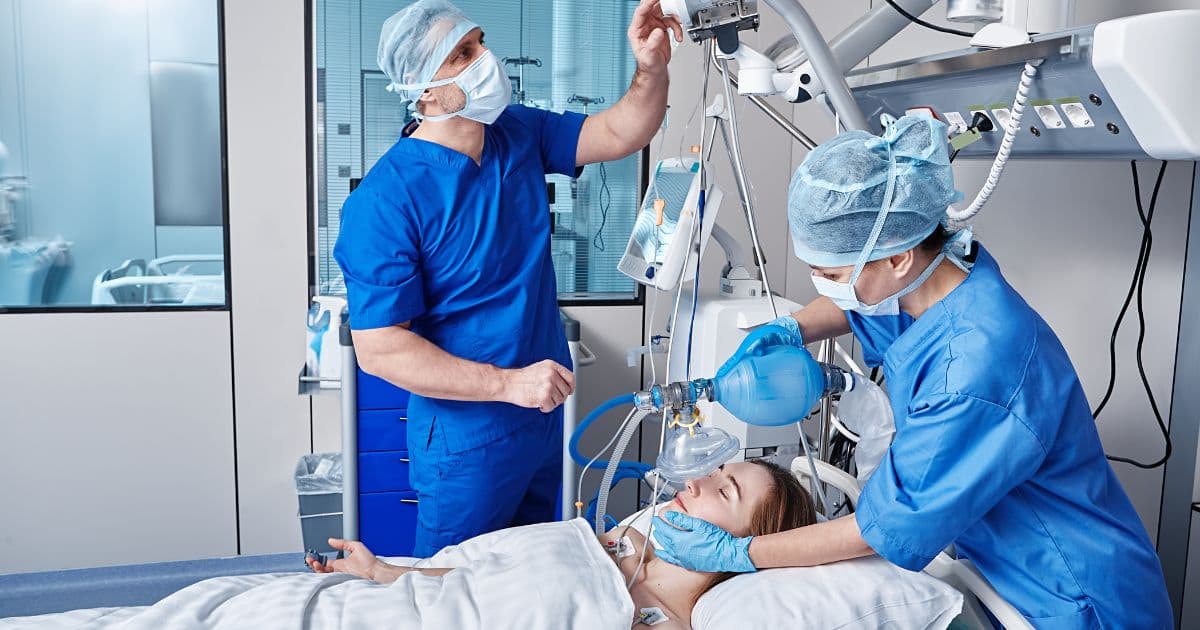
ICU nursing is not just "hard med-surg."
It is a specialty built around unstable patients, rapid changes, invasive monitoring, ventilators, titratable drips, complex families, and constant clinical judgment.
That can sound intimidating.
It should.
But ICU nurses are not born knowing ventilators, vasoactive drips, arterial lines, sepsis bundles, neuro checks, CRRT, or post-code care.
They learn it step by step.
This guide breaks down how to become an ICU nurse, what skills you need, what salary data actually says, which certifications matter, and how to apply if you are a student, new grad, or working RN trying to move into critical care.
What is an ICU nurse?
An ICU nurse is a registered nurse who cares for critically ill patients who need close monitoring, complex interventions, and rapid response to changes in condition.
ICU stands for intensive care unit.
You may also hear:
- Critical care nurse
- Intensive care nurse
- ICU RN
- Critical care RN
- CVICU nurse
- MICU nurse
- SICU nurse
- Neuro ICU nurse
- Trauma ICU nurse
- Pediatric ICU nurse
- Neonatal ICU nurse
The Bureau of Labor Statistics describes critical care nurses as RNs who work in intensive-care units and care for patients with serious, complex, and acute illnesses or injuries that require close monitoring and treatment.
That is the core of ICU nursing.
You watch closely.
You notice small changes.
You act before small changes become a crisis.
What ICU nurses actually do
ICU nurses provide direct care for patients who may be unstable, ventilated, sedated, septic, post-op, post-code, neurologically impaired, bleeding, in shock, or receiving high-risk medications.
Common ICU nurse responsibilities include:
- Complete head-to-toe assessments
- Frequent focused reassessments
- Continuous cardiac monitoring
- Neurologic checks
- Ventilator assessment and airway safety
- Titrating medications according to orders and policy
- Managing central lines and arterial lines
- Monitoring invasive hemodynamics
- Interpreting lab trends
- Recognizing early deterioration
- Coordinating with intensivists, residents, APPs, respiratory therapists, pharmacists, dietitians, PT/OT, case management, and charge nurses
- Administering blood products
- Monitoring drains, tubes, devices, and surgical sites
- Preparing for procedures
- Supporting families during high-stress situations
- Participating in codes and rapid responses
- Documenting detailed assessments, interventions, and patient response
ICU nursing is technical.
It is also deeply human.
You may care for a patient on multiple life-support therapies while also explaining updates to a terrified family member.
Both parts matter.
ICU nurse vs critical care nurse
The terms overlap.
In everyday hospital language, an ICU nurse is usually a critical care nurse.
Critical care nursing may also include nurses in:
- ICU
- Cardiac care units
- Trauma units
- Critical care transport
- Flight nursing
- Cardiothoracic units
- High-acuity specialty units
AACN's CCRN direct care pathway includes nurses who provide direct care to acutely or critically ill patients, including nurses working in ICUs, cardiac care units, trauma units, and critical care transport or flight settings.
So "ICU nurse" usually means the hospital unit.
"Critical care nurse" is the broader specialty label.
ICU nurse vs med-surg nurse
Med-surg nurses care for multiple patients with acute and chronic conditions.
ICU nurses usually care for fewer patients, but those patients need more intensive monitoring and complex interventions.
A med-surg assignment may involve four to six patients, depending on facility and shift.
An ICU assignment commonly involves one or two patients, depending on acuity and staffing policy.
Do not mistake fewer patients for easier work.
One unstable ICU patient can require constant assessment, medication titration, ventilator coordination, family updates, procedures, labs, documentation, and rapid escalation.
Main differences
| Area | Med-surg nursing | ICU nursing |
|---|---|---|
| Patient stability | Usually more stable | Often unstable or high-risk |
| Assignment size | Usually more patients | Usually fewer patients |
| Monitoring | Intermittent plus ordered monitoring | Continuous and frequent reassessment |
| Medications | Routine and some high-risk meds | Frequent high-risk and titratable meds |
| Devices | Fewer invasive devices | More invasive lines, drains, vents, devices |
| Pace | Busy with many competing needs | Intense with rapid changes |
| Priority skill | Time management across many patients | Detecting deterioration and acting fast |
ICU nurse vs stepdown nurse
Stepdown, progressive care, intermediate care, and PCU units care for patients who are too sick for med-surg but usually do not need full ICU-level support.
These units are excellent preparation for ICU.
You may see:
- Telemetry
- Cardiac drips allowed by policy
- Post-ICU patients
- Higher oxygen needs
- More frequent assessments
- Complex chronic illness
- Post-procedure monitoring
A stepdown nurse often builds rhythm interpretation, prioritization, escalation, and time management before moving into ICU.
AACN also offers PCCN certification for nurses who care for acutely ill adult patients in settings such as intermediate care, stepdown, telemetry, transitional care, direct observation, and emergency departments.
ICU nurse vs emergency department nurse
ED nurses stabilize, triage, and move patients through the emergency system.
ICU nurses manage critically ill patients over hours, days, or weeks.
Both specialties require rapid thinking.
The difference is the rhythm.
ED nursing asks:
What is the immediate threat, and where does this patient need to go next?ICU nursing asks:
What is changing minute by minute, and how do we support this patient safely over time?ED experience can help you transition into ICU.
ICU experience can also help if you later move into ED, flight, transport, rapid response, anesthesia school, or advanced practice.
Common types of ICUs
Not every ICU is the same.
The best unit for you depends on your interests, tolerance for certain patient populations, and long-term goals.
Medical ICU
Medical ICUs usually care for patients with complex medical problems.
Common conditions include:
- Sepsis
- Septic shock
- Respiratory failure
- COPD exacerbation
- ARDS
- DKA
- Severe electrolyte imbalance
- GI bleeding
- Acute kidney injury
- Overdose
- Multisystem organ failure
MICU is a strong general critical care foundation.
You will learn ventilators, pressors, sedation, sepsis, metabolic problems, and complex medical decision-making.
Surgical ICU
Surgical ICUs care for critically ill surgical patients.
Common patients include:
- Major abdominal surgery
- Vascular surgery
- Trauma surgery
- Post-op complications
- Bleeding risk
- Sepsis after surgery
- Airway or respiratory complications
- Complex wounds and drains
SICU nurses need strong assessment skills, surgical complication awareness, fluid balance judgment, and comfort with drains, tubes, dressings, and post-op trends.
Cardiovascular ICU
CVICU or CTICU nurses care for patients after cardiac surgery or with advanced cardiovascular problems.
Common patients include:
- CABG
- Valve repair or replacement
- Aortic surgery
- Cardiogenic shock
- Mechanical circulatory support
- Temporary pacing
- IABP
- Impella
- ECMO in some centers
- Complex hemodynamic monitoring
CVICU is highly specialized.
It can be a good fit if you like physiology, hemodynamics, cardiac meds, devices, and fast changes.
Cardiac ICU
Cardiac ICU or coronary care units focus on critically ill cardiac patients.
Common problems include:
- Acute MI complications
- Unstable arrhythmias
- Cardiogenic shock
- Heart failure exacerbation
- Post-cardiac arrest care
- Temporary pacing
- Mechanical circulatory support in some settings
This environment demands strong rhythm recognition and cardiovascular assessment.
Neuro ICU
Neuro ICU nurses care for patients with brain and spinal cord emergencies.
Common patients include:
- Stroke
- Intracranial hemorrhage
- Traumatic brain injury
- Seizures or status epilepticus
- Brain tumors post-op
- Increased intracranial pressure
- Spinal cord injury
- External ventricular drains
Neuro ICU nurses must be precise.
A small pupil change, new weakness, worsening headache, or declining level of consciousness can matter.
Trauma ICU
Trauma ICU nurses care for patients after severe injury.
Common issues include:
- Head injury
- Chest trauma
- Abdominal trauma
- Massive transfusion
- Orthopedic trauma
- Spinal cord injury
- Burns in some facilities
- Post-op trauma surgery
Trauma ICU can be emotionally intense and technically demanding.
Pediatric ICU
PICU nurses care for critically ill infants, children, and adolescents outside the neonatal population.
Common conditions include:
- Respiratory failure
- Sepsis
- Congenital conditions
- Trauma
- Post-op complications
- Neurologic emergencies
- Severe asthma
- DKA
PICU requires pediatric assessment skill, medication precision, family-centered communication, and comfort with age-specific physiology.
Neonatal ICU
NICU nurses care for critically ill newborns and premature infants.
Common issues include:
- Prematurity
- Respiratory distress
- Feeding problems
- Sepsis risk
- Congenital anomalies
- Surgical newborn care
- Thermoregulation
- Family bonding and education
NICU is ICU nursing, but the patient population, equipment, medication calculations, and developmental care are very different from adult ICU.
Burn ICU
Burn ICU nurses care for patients with major burns and complex wounds.
Common responsibilities include:
- Fluid resuscitation monitoring
- Pain and sedation management
- Wound care
- Infection prevention
- Thermoregulation
- Airway monitoring
- Nutrition support
- Psychosocial support
Burn ICU is physically and emotionally demanding.
It can also be one of the most meaningful ICU specialties.
How to become an ICU nurse
There is more than one path.
Some nurses start in ICU as new grads.
Some start in med-surg, telemetry, stepdown, ED, OR, PACU, or LTAC and transfer later.
Neither path is automatically better.
The best path is the one that gives you safe training, strong preceptors, enough support, and enough repetition to build competence.
Step 1: Complete nursing school
You need to graduate from an approved nursing program.
Common RN pathways include:
- Associate Degree in Nursing
- Bachelor of Science in Nursing
- Entry-level master's pathway for students with a prior bachelor's degree
- Diploma program where available
Many hospitals prefer or require a BSN, especially academic medical centers and Magnet-designated organizations.
But ADN-prepared nurses can and do work in ICU, depending on the facility and market.
If you are still in school, prioritize clinical learning over trying to memorize every ICU device.
The fundamentals matter most:
- Full assessment
- Vital signs
- Oxygenation
- Fluid balance
- Medication safety
- Infection prevention
- Lab interpretation
- Prioritization
- Patient communication
- Escalation
Step 2: Pass the NCLEX-RN
You cannot practice as an ICU RN without an RN license.
To get licensed, you must pass the NCLEX-RN and meet your state board of nursing requirements.
ICU hiring managers care about NCLEX readiness because ICU practice depends on the same clinical judgment tested on the exam.
You need to recognize cues, analyze changes, prioritize risks, take safe action, and evaluate outcomes.
For exam strategy, review the NCLEX prep guide and the NCLEX prioritization guide.
You can also build clinical judgment with practice questions.
Step 3: Decide whether to apply directly to ICU
New grads can apply directly to ICU in many hospitals.
This is especially common when the hospital has a formal nurse residency or critical care fellowship.
Direct-to-ICU may be a good fit if:
- You are comfortable asking questions
- You can take feedback without becoming defensive
- You have strong assessment basics
- You can handle stress without hiding mistakes
- You want high-acuity care
- You are willing to study outside work
- You have a supportive residency and preceptor system
Direct-to-ICU may not be ideal if:
- The unit has weak orientation
- The hospital expects you to function independently too quickly
- You struggle with basic assessments and meds
- You do not want nights, weekends, holidays, or high-stress events
- You chose ICU only because it looks impressive
Step 4: Apply to ICU nurse residency programs
A nurse residency program helps new graduate nurses transition into practice.
Some programs include ICU tracks.
Others hire new grads into many units, including critical care, depending on openings.
Hospital examples show how variable this can be.
Cleveland Clinic describes a nurse residency program that supports new graduate nurses with structured transition-to-practice support.
UC Davis Health describes a new graduate nurse residency that can include critical care opportunities, monthly didactic classes, preceptorship, and mentorship.
University of Iowa Health Care describes a nurse residency that helps new grads build a foundation during the first year and includes paid learning on the job and in the classroom.
Your local hospitals may use different names:
- Nurse residency
- New graduate RN program
- Transition-to-practice program
- Critical care fellowship
- ICU fellowship
- Specialty training program
- Versant program
- Vizient/AACN nurse residency
- ANCC PTAP-accredited program
For a full breakdown, use NurseZee's nurse residency programs guide.
Step 5: Build a strong ICU application
ICU hiring is competitive in many markets.
Your resume should show that you understand the specialty.
Do not only write that you are "passionate."
Show evidence.
Include:
- RN license or NCLEX date
- BLS
- ACLS if already completed or scheduled
- Senior practicum or capstone
- ICU, ED, stepdown, telemetry, PACU, OR, or high-acuity clinical rotations
- Nurse externship or tech experience
- Simulation experience
- Preceptorship details
- EHR experience
- Medication safety examples
- Quality improvement projects
- Leadership roles
- Strong clinical references
For resume structure and examples, use the new grad nurse resume guide.
ICU resume bullet examples
Use specific clinical language.
Completed 180-hour senior practicum in a 24-bed medical ICU, supporting care for ventilated patients, central line maintenance, hourly intake/output tracking, glucose monitoring, and family communication under RN supervision.Recognized and reported acute respiratory change during clinical rotation, including increased work of breathing, declining SpO2, and new confusion; assisted RN with focused reassessment and escalation.Served as nurse extern on a telemetry unit, obtaining vital signs, reporting abnormal rhythms and symptoms, assisting with mobility, and documenting intake/output for high-acuity cardiac patients.Completed ACLS prior to graduation to strengthen readiness for critical care residency applications.Step 6: Prepare for ICU interviews
ICU interviews often test judgment.
You may get behavioral, clinical, teamwork, and stress questions.
Common ICU interview questions include:
- Why do you want ICU?
- Tell me about a time you noticed a patient was getting worse.
- How do you handle feedback?
- What would you do if you made a medication error?
- How do you prioritize when two patients need you?
- How do you communicate with a difficult family member?
- What is your biggest weakness as a new nurse?
- How would you handle conflict with a preceptor?
- What does patient safety mean to you?
- How do you learn after a hard shift?
Strong answer structure
Use this format:
Situation:
What was happening?

Concern:
What patient safety issue or clinical priority did you identify?

Action:
What did you do within your role?

Result:
What happened next?

Reflection:
What did you learn?
Example interview answer
Question:
Tell me about a time you recognized a change in a patient.Answer:
During my senior practicum, I was helping care for a patient admitted with pneumonia. I noticed the patient was more restless than earlier, had increased work of breathing, and the SpO2 had dropped from the mid-90s to 89% on the same oxygen setting. I immediately told my preceptor and gave the specific changes instead of saying the patient "looked bad." We reassessed the patient, checked lung sounds, verified the oxygen setup, and escalated to the provider. I learned that trending changes matters and that clear communication helps the team act faster.Why it works:
The answer shows cue recognition, prioritization, escalation, teamwork, and reflection. It does not pretend the student independently managed the emergency.Step 7: Complete ICU orientation
ICU orientation is where you begin becoming an ICU nurse.
Orientation may include:
- Classroom days
- Skills labs
- Simulation
- Preceptor shifts
- Progressive patient assignments
- Ventilator basics
- Drip titration policy
- Hemodynamic monitoring
- Unit documentation standards
- Code response training
- Device training
- Medication safety checks
- Policy review
- Competency validation
Orientation length varies widely.
A new grad ICU orientation may last several months.
An experienced RN transferring from another specialty may have a shorter or customized orientation.
Do not compare your timeline to another nurse's timeline.
Compare your practice to safe expectations.
Step 8: Survive the first ICU year
The first year in ICU can feel like drinking from a fire hose.
That does not mean you are failing.
It means you are learning a high-acuity specialty.
Your job is to become safer every month.
What to focus on first
First 30 days:
- Unit routine
- Basic documentation
- Safety checks
- Where supplies are
- Who to call
- Assessment flow
- Medication scanning and double checks
- Bedside report
- Alarm basics
- Lines, tubes, and drains
Days 31-90:
- Trends in vitals and labs
- Basic ventilator terminology
- Common drips
- Sepsis and shock patterns
- Sedation assessment
- Pain assessment
- Delirium prevention basics
- Skin and pressure injury prevention
- Family updates with preceptor support
Months 4-6:
- More independent prioritization
- Titration reasoning
- Hemodynamic trends
- More complex admissions
- Post-procedure monitoring
- Code roles
- Interdisciplinary rounds
- Discharge and transfer readiness
Months 7-12:
- Stronger anticipation
- Better clinical pattern recognition
- Managing two complex patients safely
- Teaching newer learners in small ways
- Preparing for specialty education
- Identifying long-term goals
ICU nurse education requirements
The minimum education requirement is an RN-qualifying nursing program plus RN licensure.
In practice, job requirements vary by facility.
ADN vs BSN for ICU
You can become an ICU nurse with an ADN in many settings.
A BSN may improve competitiveness, especially in large academic hospitals, Magnet hospitals, and competitive metro markets.
Some employers hire ADN nurses with an agreement to complete a BSN within a certain timeframe.
Check each job posting carefully.
Do not assume every ICU requires a BSN.
Do not assume an ADN will never be competitive.
Your clinical experience, residency fit, references, interview, and local market all matter.
Nursing school choices that help ICU applicants
If you are still in school, look for ways to build high-acuity exposure.
Helpful choices include:
- ICU senior practicum
- ED clinical rotation
- Stepdown or telemetry practicum
- Nurse externship
- Patient care tech role
- Cardiac monitor tech role
- Respiratory-focused clinical experiences
- Critical care elective
- Simulation lab participation
- Student nurse association leadership
- Quality improvement project
Do you need med-surg before ICU?
No, not always.
Some excellent ICU nurses start in med-surg.
Some excellent ICU nurses start in ICU.
Med-surg can build:
- Time management
- Medication routine
- Patient communication
- Discharge teaching
- Assessment repetition
- Teamwork
Stepdown or telemetry can build:
- Rhythm recognition
- Higher-acuity assessment
- Oxygen needs
- Drip exposure depending on policy
- Escalation skills
ICU can build critical care skills from day one if the support is strong.
The real question is whether your first job teaches safe nursing practice.
Should you work as a CNA, tech, or extern first?
It can help.
It is not required.
A patient care tech, nurse extern, or clinical assistant role can help you learn:
- Basic hospital workflow
- Patient mobility
- Vital signs
- Glucose checks
- Intake and output
- EHR documentation
- Unit culture
- Communication with nurses
- How hospital shifts actually feel
If you can get an ICU tech or extern job, that can make your ICU application stronger.
But do not panic if you cannot.
A strong practicum, solid references, good resume, and well-prepared interview can still help.
ICU nurse skills
ICU nursing requires a mix of technical skills, clinical judgment, communication, and emotional endurance.
You do not master these before starting.
You build them through orientation, repetition, feedback, and study.
Skill 1: Focused assessment
ICU nurses assess constantly.
A full head-to-toe assessment matters.
But ICU nursing also demands focused reassessment when something changes.
You should be able to ask:
- Is the airway protected?
- Is oxygenation improving or worsening?
- Is the blood pressure stable?
- Is perfusion adequate?
- Is mental status changing?
- Is urine output adequate?
- Are labs trending in the wrong direction?
- Are lines and tubes still safe?
- Is the patient responding to treatment?
ICU assessment example
Patient is ventilated and sedated. HR increased from 92 to 126, MAP decreased from 72 to 58, urine output dropped to 10 mL/hr, and lactate increased from 2.1 to 4.0.Clinical thinking:
This is not just "abnormal vitals." The pattern suggests worsening perfusion and possible shock. The nurse should reassess, verify lines and measurements, check current drips, notify the provider or team according to policy, and anticipate orders or protocol-based actions.Skill 2: Prioritization
ICU nurses prioritize every shift.
Sometimes every minute.
You need to decide what matters first:
- Airway
- Breathing
- Circulation
- Neuro change
- Bleeding
- Sepsis concern
- Shock concern
- Dangerous medication issue
- Equipment failure
- Line or tube dislodgement
- Safety risk
The same thinking that helps with NCLEX prioritization helps in ICU.
Use the NCLEX prioritization guide to strengthen that foundation.
Skill 3: Respiratory assessment
ICU nurses frequently care for patients with respiratory failure.
You should understand:
- Respiratory rate
- Work of breathing
- Lung sounds
- Oxygen delivery devices
- Pulse oximetry limits
- ABG basics
- Ventilator terminology
- Airway safety
- Suctioning policy
- Aspiration risk
- Sedation and respiratory drive
You do not need to be a respiratory therapist.
You do need to know when the patient is not ventilating or oxygenating safely.
Skill 4: Ventilator basics
Ventilator management is a team effort, usually involving respiratory therapy and providers.
ICU nurses still need to understand the basics.
Learn common terms:
- FiO2
- PEEP
- Tidal volume
- Respiratory rate
- Pressure support
- Peak pressure
- Plateau pressure
- Minute ventilation
- Assist control
- SIMV
- Pressure control
- CPAP
- Spontaneous breathing trial
Know what your facility expects you to assess and document.
Examples:
- ETT position
- Securement
- Oral care
- Cuff pressure policy
- Lung sounds
- Ventilator alarms
- Patient-ventilator synchrony
- Sedation level
- Restraint safety if used
- Skin integrity
- Aspiration precautions
Skill 5: Hemodynamics
Hemodynamics means blood flow and pressure in the cardiovascular system.
In ICU, hemodynamics may include:
- Blood pressure
- MAP
- Heart rate
- Rhythm
- Peripheral pulses
- Capillary refill
- Skin temperature
- Urine output
- Lactate
- Arterial line waveform
- Central venous pressure in some settings
- Cardiac output data in some units
- Device-specific values in advanced cardiac units
Learn to connect numbers to the patient.
A MAP of 60 means more when paired with cool skin, confusion, low urine output, rising lactate, and increasing vasopressor needs.
Skill 6: Medication safety
ICU medications can be high-risk.
Common ICU medication categories include:
- Vasopressors
- Inotropes
- Sedatives
- Analgesics
- Paralytics
- Antiarrhythmics
- Anticoagulants
- Insulin infusions
- Electrolyte replacements
- Antibiotics
- Blood products
You need to know:
- Why the patient is receiving the medication
- Dose range
- Titration order
- Monitoring parameters
- Compatibility
- Line requirements
- Concentration
- Pump programming
- Side effects
- What to do if the patient changes
High-risk med check
Before titrating a vasoactive drip, verify the order parameters, current MAP goal, pump channel, concentration, line access, patient response, and documentation requirements.Skill 7: Rhythm recognition
ICU nurses monitor cardiac rhythms constantly.
You should learn to recognize:
- Sinus rhythm
- Sinus tachycardia
- Sinus bradycardia
- Atrial fibrillation
- Atrial flutter
- SVT
- VT
- VF
- Asystole
- Heart blocks
- Paced rhythms
- Artifact
Do not rely only on the monitor label.
Monitors can be wrong.
Look at the patient.
Look at the rhythm strip.
Ask for help early.
Skill 8: Lab interpretation
ICU nurses trend labs.
Important labs include:
- CBC
- CMP
- ABG or VBG
- Lactate
- Troponin
- Coagulation studies
- Electrolytes
- Creatinine
- BUN
- Glucose
- Cultures
- Drug levels when ordered
- Type and screen
Do not memorize isolated values only.
Ask what the trend means.
A creatinine rising from 0.8 to 1.6 matters more than a single abnormal value without context.A hemoglobin drop after surgery matters more when paired with tachycardia, hypotension, increased drainage, and pallor.Skill 9: Device awareness
ICU nurses care for many devices.
Depending on the unit, you may see:
- Central venous catheters
- Arterial lines
- PICC lines
- Midlines
- Chest tubes
- Surgical drains
- External ventricular drains
- Foley catheters
- Feeding tubes
- Ostomies
- Temporary pacers
- IABP
- Impella
- ECMO
- CRRT
- Wound vacs
- Tracheostomies
You need to know what the device does, what can go wrong, and what changes require escalation.
Skill 10: Communication
ICU communication must be specific.
Weak communication:
The patient looks bad.Better communication:
The patient is more lethargic than baseline, MAP is 58 despite norepinephrine at 0.12 mcg/kg/min, urine output has been 10 mL/hr for two hours, lactate increased from 2.1 to 4.0, and the extremities are cool. I am concerned about worsening shock.Use objective data.
Use trends.
State your concern.
Ask for what you need.
Skill 11: Family support
Families in ICU are often scared, angry, grieving, confused, or exhausted.
You do not need to have every answer.
You do need to communicate honestly within your role.
Helpful phrases:
I know this is a lot to take in. I can explain what the tubes and monitors are doing.The provider will discuss the full plan, but I can tell you what I am monitoring at the bedside.Right now, my priority is keeping her oxygen and blood pressure stable. I will update you as soon as I can.I do not want to guess. Let me clarify that with the team.Skill 12: Emotional regulation
ICU nurses see hard things.
Codes.
Deaths.
Trauma.
Family conflict.
Moral distress.
Bad outcomes despite good care.
You need emotional regulation, not emotional numbness.
That means you can stay functional during urgent care, then process afterward in healthy ways.
Use:
- Debriefing
- Peer support
- Employee assistance programs
- Professional counseling when needed
- Time away from work
- Real rest
- Boundaries
- Mentorship
ICU nurse certifications
Certifications fall into two categories.
Some are usually required for the job.
Others are specialty credentials you earn after experience.
BLS
Basic Life Support is usually required for bedside nurses.
Most hospitals require American Heart Association or American Red Cross BLS, but requirements vary.
Check the job posting.
BLS is not ICU-specific.
It is a baseline requirement.
ACLS
Advanced Cardiovascular Life Support is commonly required or strongly preferred for adult ICU nurses.
The American Heart Association states ACLS is for healthcare professionals who direct or participate in management of cardiac arrest, stroke, or other cardiopulmonary emergencies, including personnel in critical care and intensive care.
Many hospitals require ACLS before hire, during orientation, or within a set number of months after hire.
If you are applying to adult ICU roles, ACLS can strengthen your application.
But do not treat ACLS as a substitute for ICU training.
PALS
Pediatric Advanced Life Support is commonly required for pediatric ICU nurses and some emergency or transport roles.
If you want PICU, check job postings.
Some programs require it before hire.
Others provide it during orientation.
NRP
Neonatal Resuscitation Program is commonly required for NICU nurses and labor/delivery-related newborn roles.
If you want NICU, check the specific facility requirement.
NIHSS
NIH Stroke Scale certification may be useful in neuro ICU, stroke units, ED, and hospitals with stroke programs.
Some facilities require it.
Others provide it.
CCRN
CCRN is the major specialty certification for many ICU nurses.
AACN describes CCRN as a specialty certification for nurses who provide direct care to acutely or critically ill adult patients.
For the adult CCRN direct care pathway, AACN lists these core eligibility requirements:
- Current, unencumbered U.S. RN or APRN license
- Direct care hours with acutely or critically ill adult patients
- Two-year option: 1,750 hours in the previous two years, with 875 hours in the most recent year
- Five-year option: 2,000 hours in the previous five years, with 144 hours in the most recent year
- Verifiable clinical practice hours
Do not plan to take CCRN as a new grad before you have ICU experience.
Plan to become eligible through practice.
CCRN adult, pediatric, and neonatal
CCRN is available for different patient populations.
Choose the exam that matches your actual practice.
- Adult CCRN: adult critical care
- Pediatric CCRN: pediatric critical care
- Neonatal CCRN: neonatal critical care
Do not choose adult CCRN if you practice in NICU.
Do not choose pediatric CCRN if your experience is adult ICU.
Match the credential to your patient population.
PCCN
PCCN is not an ICU certification.
It is a progressive care certification.
It can still be useful for nurses in stepdown, telemetry, intermediate care, ED, or transitional care settings who care for acutely ill adult patients.
If your pathway to ICU starts in stepdown or telemetry, PCCN may be a reasonable stepping-stone credential once you meet eligibility.
CMC
CMC is an AACN cardiac medicine subspecialty certification.
AACN describes CMC as a subspecialty certification for certified nurses who provide direct care to acutely or critically ill adult cardiac patients.
It may fit nurses in:
- Cardiac care units
- Medical ICUs
- Telemetry
- Progressive care
- Heart failure clinics
- Interventional cardiology
- Cardiac cath labs
- Electrophysiology units
CMC is typically attached to a clinical nursing specialty certification, such as CCRN-CMC.
CSC
CSC is an AACN cardiac surgery subspecialty certification.
AACN describes CSC as a subspecialty certification for certified nurses who provide direct care to acutely or critically ill adult cardiac surgery patients in the first 48 hours postoperatively.
It may fit CVICU or cardiothoracic surgery nurses.
CSC is typically attached to a clinical nursing specialty certification, such as CCRN-CSC.
TNCC
Trauma Nursing Core Course may be useful if you work in trauma ICU, ED, transport, or a facility that expects trauma competency.
It may be required by some employers.
Check your unit requirements.
CCRN-K
CCRN-K is for nurses whose practice influences acutely or critically ill patients but does not primarily involve direct bedside care.
Examples may include educators, managers, directors, or other knowledge-based roles.
Most new ICU nurses should focus on direct-care CCRN later.
Certification plan by career stage
| Career stage | Useful focus |
|---|---|
| Nursing student | BLS, strong clinical fundamentals, ICU practicum if possible |
| New grad applying to ICU | BLS, ACLS if appropriate, strong resume, residency applications |
| New ICU nurse | Unit orientation, ventilator basics, drips, safety, policies |
| 6-12 months | Rhythm confidence, hemodynamics, device familiarity, specialty classes |
| 1-2 years | CCRN eligibility planning if direct care hours qualify |
| Experienced ICU nurse | CCRN, CMC, CSC, charge nurse skills, precepting, advanced devices |
ICU nurse salary
BLS does not publish a separate national wage category for ICU nurses.
ICU nurses are included under registered nurses.
That matters because ICU pay can vary by hospital, state, union contract, shift, specialty differential, experience, and whether the role is staff, float pool, internal travel, agency, or travel nursing.
Use RN wage data as the baseline.
Then review actual ICU job postings and local contracts for the real number.
National RN salary baseline
The Bureau of Labor Statistics reports that the median annual wage for registered nurses was $93,600 in May 2024.
BLS also reports the median annual wage for RNs in hospitals was $97,260 in May 2024.
The lowest 10 percent of RNs earned less than $66,030, and the highest 10 percent earned more than $135,320.
That is not ICU-specific.
But it is the most reliable national RN baseline.
Job outlook for RNs
BLS projects RN employment to grow 5 percent from 2024 to 2034.
BLS also projects about 189,100 RN openings per year on average during that decade.
ICU demand can vary by region and facility.
Large hospitals, academic medical centers, trauma centers, specialty heart centers, and children's hospitals may hire ICU nurses more regularly than smaller facilities.
What affects ICU nurse pay?
ICU pay depends on more than the word "ICU."
Factors include:
- State
- City or metro area
- Union contract
- Hospital system
- Academic vs community hospital
- Years of RN experience
- Critical care experience
- Night shift differential
- Weekend differential
- Charge nurse differential
- Float pool differential
- Certification differential
- Clinical ladder level
- Preceptor pay
- On-call requirements
- Internal travel or resource team role
- Overtime
- Bonuses
- Cost of living
ICU salary example from job postings
Hospital job postings can show real pay ranges, but they change quickly.
For example, a Mayo Clinic ICU/PCU RN posting in Minnesota listed a compensation range of $38.83-$59.16 per hour based on union contract, along with current Minnesota RN license and BLS requirements.
Do not use one posting as a national ICU salary estimate.
Use it as an example of how facility, location, and contract shape pay.
How to research ICU salary accurately
Use this order:
- Check BLS RN wages for your state and metro area.
- Check NurseZee's RN salary by state guide.
- Search current ICU RN job postings in your target hospitals.
- Look for union wage scales if the hospital is unionized.
- Ask about shift differentials, certification differentials, and clinical ladder pay.
- Compare benefits, tuition reimbursement, retirement match, health insurance, parking, commute, and mandatory overtime.
- Adjust for cost of living.
Questions to ask about ICU pay
Ask these before accepting an offer:
- What is the base hourly rate?
- Is the rate based on years of RN experience?
- Is there a night shift differential?
- Is there a weekend differential?
- Is there a certification differential for CCRN?
- Is there preceptor pay?
- Is there charge nurse pay?
- Is there a clinical ladder?
- Is overtime voluntary or expected?
- Is call required?
- Is parking free?
- Is tuition reimbursement available?
- Is certification reimbursement available?
- Are ACLS, CCRN review, or critical care courses paid?
- What is the orientation length?
How long does it take to become an ICU nurse?
The timeline depends on your starting point.
If you are in high school
Possible timeline:
- ADN route: about 2-3 years after prerequisites, depending on program
- BSN route: about 4 years
- NCLEX and licensing: usually weeks to months after graduation, depending on scheduling and state processing
- ICU residency/orientation: often several months
- Independent beginner ICU practice: often after orientation, but still developing
- CCRN eligibility: usually after enough qualifying critical care hours
If you are in nursing school
Possible timeline:
- Finish nursing program
- Pass NCLEX-RN
- Apply to ICU residency or ICU new grad roles
- Start orientation
- Build competence over the first year
You can become an ICU nurse as your first RN job if hired and trained safely.
If you are already an RN
Possible timeline:
- Apply to internal transfer, fellowship, or ICU opening
- Complete ICU transition orientation
- Build specialty competence over 6-12 months
- Consider CCRN once eligible
Your prior experience can help.
Med-surg, telemetry, stepdown, ED, PACU, OR, dialysis, oncology, and LTAC experience can all transfer in different ways.
If you are an LPN/LVN
LPN/LVN roles in ICU are limited and depend heavily on state scope and facility policy.
To become an ICU RN, you generally need to complete an LPN-to-RN bridge or RN program, pass NCLEX-RN, and obtain RN licensure.
Can new grads work in ICU?
Yes.
But the quality of the program matters.
A strong new grad ICU environment should include:
- Structured residency
- Extended preceptorship
- Clear competency checklist
- Regular check-ins
- Skills labs
- Simulation
- Gradual progression
- Supportive charge nurses
- Safe assignments
- Debriefing after critical events
- Educator involvement
- Access to policies and protocols
- Clear escalation expectations
A risky new grad ICU environment may include:
- Very short orientation
- Frequent preceptor changes without communication
- Unsafe assignments early
- Poor feedback culture
- Bullying or shaming
- No educator support
- Pressure to hide uncertainty
- No clear resource nurse
- High turnover without explanation
What ICU hiring managers look for
Hiring managers do not expect new grads to function like experienced ICU nurses.
They look for potential and safety.
Strong signs include:
- Teachable attitude
- Clear communication
- Accountability
- Clinical curiosity
- Ability to recognize limits
- Good attendance and reliability
- Respect for the team
- Willingness to study
- Strong references
- Patient safety mindset
- Emotional maturity
- Interest in critical care for the right reasons
Weak signs include:
- Overconfidence
- Blaming others
- Vague answers
- No understanding of ICU acuity
- Wanting ICU only for CRNA school
- Poor examples of teamwork
- Dismissing med-surg or stepdown nurses
- Saying you work best alone
- No plan for stress management
The CRNA school issue
Many nurses use ICU experience as part of a future CRNA path.
That is valid.
But do not make your ICU interview all about anesthesia school.
The unit is hiring an ICU nurse.
They need someone who wants to learn ICU nursing now, care for the patients now, and contribute to the team now.
If CRNA is your long-term goal, frame it carefully.
Better answer:
I am interested in high-acuity nursing because I want to build strong assessment, physiology, and clinical judgment skills. Right now, my goal is to become a safe ICU nurse, learn from experienced preceptors, and contribute to this unit. I know advanced goals require a strong bedside foundation first.How to get ICU experience before graduating
You can strengthen your ICU application before you become an RN.
Request an ICU practicum
If your school allows preferences, request:
- ICU
- ED
- Stepdown
- Telemetry
- PACU
- Cardiac unit
- Trauma unit
- High-acuity medical unit
Explain why.
Be professional.
Do not demand.
Apply for nurse extern roles
Nurse extern roles can help you learn hospital workflow and build relationships.
Look for:
- ICU extern
- Critical care extern
- Nurse apprentice
- Student nurse tech
- Patient care tech
- Clinical assistant
Shadow an ICU nurse
Shadowing can help you decide whether ICU is actually for you.
Ask about:
- Shift rhythm
- Patient acuity
- Documentation load
- Teamwork
- Codes
- Family meetings
- Emotional stress
- Orientation
- New grad support
Join critical care learning opportunities
Look for:
- AACN student resources
- Critical care webinars
- Hospital open houses
- Skills labs
- Nursing conferences
- Simulation events
- Cardiac rhythm classes
- Sepsis education
- Ventilator basics workshops
ICU nurse resume tips
Your resume should be clean, specific, and evidence-based.
Do not overstate your skill level.
Do not claim independent ICU competence if you were a student.
Use phrases like:
- Assisted with
- Observed
- Supported
- Reported
- Participated in
- Documented under supervision
- Completed clinical rotation in
- Completed senior practicum in
Strong ICU resume sections
Use these sections:
- Header
- Professional summary
- Education
- Licensure
- Certifications
- Clinical experience
- Healthcare experience
- Skills
- Leadership or projects
- Awards if relevant
ICU resume summary examples
New grad example:
New graduate RN with senior practicum experience in a medical ICU and additional clinical exposure to telemetry and emergency nursing. Strong interest in critical care, patient safety, respiratory assessment, and interdisciplinary teamwork. BLS certified; ACLS scheduled for June 2026.Experienced RN transfer example:
Registered nurse with two years of telemetry experience caring for cardiac patients with dysrhythmias, heart failure, post-procedure monitoring needs, and high-risk medications. Seeking transition to ICU to build advanced critical care skills in hemodynamics, ventilator support, and vasoactive medication management.ICU skills for a resume
Use skills you can honestly defend.
Examples:
- Head-to-toe assessment
- Focused respiratory assessment
- Telemetry monitoring
- EKG rhythm recognition
- Medication administration
- IV therapy within scope
- Intake and output monitoring
- Sepsis screening
- Fall prevention
- Central line infection prevention principles
- Foley care and CAUTI prevention
- Wound care basics
- EHR documentation
- Interdisciplinary communication
- SBAR handoff
- Patient and family education
- Rapid escalation of abnormal findings
For more resume help, use the new grad nurse resume guide.
ICU nurse interview preparation
Prepare examples before the interview.
Do not memorize robotic answers.
Know your stories.
Stories to prepare
Have examples for:
- Patient deterioration
- Conflict
- Feedback
- Mistake or near miss
- Teamwork
- Stress
- Prioritization
- Family communication
- Learning something difficult
- Advocacy
ICU interview clinical scenarios
You may be asked what you would do in a basic scenario.
Example:
Your patient becomes acutely short of breath and the SpO2 drops to 84%. What do you do?Safe answer:
I would assess the patient immediately, check airway and breathing, verify the oxygen device and probe, call for help if needed, raise the head of bed unless contraindicated, apply oxygen or increase support according to orders and policy, assess lung sounds and vital signs, notify the RN/preceptor/provider as appropriate, and continue reassessing response.Why it works:
The answer prioritizes assessment, oxygenation, safety, help, escalation, and reassessment. It does not jump straight to a diagnosis without data.Questions to ask the ICU manager
Ask questions that reveal support and safety.
Good questions include:
- How long is ICU orientation for new grads or new-to-ICU nurses?
- Is there a formal nurse residency or critical care fellowship?
- How are preceptors selected?
- How often do residents meet with educators or managers?
- What patient assignments do new nurses start with?
- How do you support nurses after difficult events?
- What certifications are required and when?
- Does the unit support CCRN review or reimbursement?
- What are common reasons new ICU nurses struggle here?
- What does success look like after six months?
ICU nurse clinical judgment
ICU nursing is clinical judgment in real time.
The NCSBN Clinical Judgment Measurement Model includes:
- Recognize cues
- Analyze cues
- Prioritize hypotheses
- Generate solutions
- Take action
- Evaluate outcomes
That sequence fits ICU practice.
ICU clinical judgment example
Cues:
Ventilated patient with pneumonia. Temperature 39.2°C, HR 132, MAP 57, urine output 15 mL/hr, lactate rising, skin cool, new mottling.Analyze cues:
The pattern suggests worsening infection with poor perfusion and possible septic shock.Prioritize hypothesis:
Shock and inadequate perfusion are the priority concerns.Generate solutions:
Reassess airway, breathing, circulation, verify readings and lines, review current fluids/drips/antibiotics, notify team rapidly, anticipate cultures, labs, fluids, vasopressor adjustment, and sepsis protocol per facility policy.Take action:
Call for help, communicate the trend clearly, implement ordered or protocol-based interventions, and monitor response.Evaluate outcomes:
Track MAP, HR, urine output, lactate trend, mental status or sedation goals, temperature, oxygenation, and provider plan.Common ICU diagnoses and conditions to study
You do not need to master every disease before applying.
But these topics show up often.
Respiratory
Study:
- Respiratory failure
- Pneumonia
- ARDS
- COPD exacerbation
- Pulmonary embolism
- Asthma exacerbation
- Ventilator-associated pneumonia prevention
- Tracheostomy care basics
- ABG interpretation
Cardiovascular
Study:
- Shock types
- Sepsis and septic shock
- Acute coronary syndrome
- Heart failure
- Cardiogenic shock
- Dysrhythmias
- Post-cardiac arrest care
- Hypertensive emergency
- Pacemakers and temporary pacing basics
Neuro
Study:
- Stroke
- Intracranial hemorrhage
- Traumatic brain injury
- Seizures
- Increased intracranial pressure
- Neuro assessment
- Pupil changes
- Sedation and neuro checks
Renal and metabolic
Study:
- Acute kidney injury
- Chronic kidney disease in critical illness
- Hyperkalemia
- DKA
- Hypoglycemia
- Hyponatremia
- Metabolic acidosis
- Fluid overload
- CRRT basics if used in your unit
GI and surgical
Study:
- GI bleed
- Liver failure
- Pancreatitis
- Post-op bleeding
- Ileus
- Bowel ischemia
- Abdominal compartment syndrome basics
- Surgical drains
Infection and sepsis
Study:
- Sepsis screening
- Cultures
- Lactate
- Antibiotic timing
- Source control
- Fluid resuscitation basics
- Vasopressors
- Organ dysfunction signs
ICU nurse schedule and work life
ICU nurses often work 12-hour shifts.
Common schedules include:
- Days
- Nights
- Rotating shifts
- Weekends
- Holidays
- Self-scheduling where available
- Every other weekend requirements
- On-call in some units
New grads may have less schedule choice.
Night shift may be more available.
Nights can be a strong learning environment, but support varies.
Ask how many resources are available at night:
- Charge nurse without assignment?
- Resource nurse?
- Intensivist in house?
- Respiratory therapy coverage?
- Pharmacy coverage?
- Rapid response team?
- Educator availability?
Is ICU nursing stressful?
Yes.
ICU nursing can involve high stakes, alarms, complex families, codes, death, moral distress, and intense workloads.
It can also offer strong teamwork, deep learning, meaningful patient relationships, and a clear sense of purpose.
Stress does not mean you are in the wrong specialty.
But chronic unsafe staffing, bullying, lack of support, and constant dread are warning signs.
Pros and cons of ICU nursing
Pros
ICU nursing can offer:
- Deep physiology learning
- High-acuity skills
- Close nurse-patient monitoring
- Strong teamwork
- Specialty certification pathways
- CRNA or advanced practice preparation
- Transferable skills
- Meaningful patient and family care
- Constant learning
Cons
ICU nursing can also involve:
- High stress
- Emotional fatigue
- Death and poor outcomes
- Night shifts
- Weekends and holidays
- Complex documentation
- Alarm fatigue
- Physically demanding care
- Family conflict
- Moral distress
- Steep learning curve
Mistakes new ICU nurses make
Every new ICU nurse makes mistakes in thinking.
The goal is to catch them early and learn.
Mistake 1: Trying to look independent too soon
ICU independence comes after safe repetition.
Ask questions early.
Escalate early.
Double-check high-risk tasks.
Mistake 2: Memorizing numbers without seeing trends
A single lab value matters.
A trend often matters more.
Ask:
What changed? How fast? What else changed with it?Mistake 3: Focusing on the monitor and not the patient
The monitor is data.
The patient is the patient.
If the monitor says the rhythm is fine but the patient is pale, diaphoretic, hypotensive, and confused, assess the patient.
Mistake 4: Not knowing line and tube purpose
For every line, tube, drain, or device, know:
- What it is
- Why it is there
- Where it is supposed to be
- What can go wrong
- What output or waveform is expected
- When to call for help
Mistake 5: Giving vague updates
Practice concise, data-based communication.
Instead of:
He is not doing well.Say:
His MAP has been below goal for 20 minutes, norepinephrine is increasing, urine output is low, and lactate is rising. I am concerned about worsening shock.Mistake 6: Ignoring family communication
Family members notice whether you explain what you can and follow through.
You do not need to provide provider-level updates.
You do need to communicate respectfully and consistently within your role.
Mistake 7: Not debriefing after hard events
After a code, death, error, near miss, or traumatic case, debrief when possible.
Ask:
- What happened?
- What went well?
- What could I do better next time?
- What do I need to learn?
- Do I need support?
30-60-90 day ICU learning plan
Use this as a self-check during orientation.
First 30 days
Focus on:
- Unit layout
- Policies
- Basic assessment flow
- Bedside safety checks
- EHR documentation
- Medication scanning
- Hand-off structure
- Common supplies
- Alarm basics
- Line tracing
- Drain/tube awareness
- Asking for help
Study topics:
- Shock basics
- Oxygen delivery devices
- ABG basics
- Common ICU labs
- Common ICU meds
- Sepsis basics
Days 31-60
Focus on:
- Trends
- Ventilator basics
- Sedation scales
- Pain scales
- Delirium prevention
- Rhythm recognition
- Vasoactive drip purpose
- Arterial line basics
- Central line safety
- Family communication
Study topics:
- Norepinephrine, vasopressin, epinephrine, phenylephrine, dobutamine basics
- Propofol, dexmedetomidine, fentanyl, midazolam basics
- Insulin infusion policies
- Electrolyte replacement policies
Days 61-90
Focus on:
- More independent prioritization
- Anticipating complications
- Communicating during rounds
- Managing one complex patient with less prompting
- Coordinating tasks with respiratory therapy
- Recognizing deterioration earlier
- Safe admission and transfer routines
Study topics:
- ARDS
- Septic shock
- DKA
- GI bleed
- Acute kidney injury
- Post-cardiac arrest care
- Neuro changes
Months 4-12
Focus on:
- Managing two patients safely if appropriate
- More complex drips
- Specialty devices in your unit
- Charge nurse communication
- Precepting small tasks later in the year if appropriate
- CCRN long-term planning
- Clinical ladder goals
Study topics:
- Hemodynamics
- Ventilator modes
- Device-specific policies
- Specialty ICU conditions
- End-of-life communication
- Ethical issues
ICU nurse study plan for beginners
Do not try to study everything at once.
Use weekly focus.
Week 1: Assessment and safety
Study:
- Head-to-toe assessment
- Neuro assessment
- Respiratory assessment
- Skin assessment
- Line tracing
- Fall prevention
- Pressure injury prevention
Week 2: Oxygenation
Study:
- Oxygen devices
- ABGs
- Respiratory failure
- Ventilator terms
- Suctioning policy
- Aspiration prevention
Week 3: Hemodynamics
Study:
- MAP
- Shock types
- Arterial lines
- Urine output
- Lactate
- Perfusion signs
Week 4: Common drips
Study:
- Vasopressors
- Sedation
- Analgesia
- Insulin drips
- Electrolyte replacement
- Anticoagulation basics
Week 5: Sepsis and infection
Study:
- Sepsis criteria used by your facility
- Cultures
- Antibiotics
- Lactate
- Fluids
- Source control
- Central line infection prevention
- Foley infection prevention
Week 6: Cardiac rhythm basics
Study:
- Sinus rhythms
- Atrial fibrillation
- SVT
- VT/VF
- Heart blocks
- Paced rhythms
- ACLS algorithms at a high level
Sample ICU career paths
Path 1: New grad to ICU
BSN student -> ICU senior practicum -> NCLEX-RN -> ICU nurse residency -> 4-6 month orientation -> first year ICU practice -> CCRN eligibility planning after enough hoursBest for:
Students with strong support, solid fundamentals, and access to a structured ICU residency.Path 2: Med-surg to ICU
ADN or BSN RN -> 1-2 years med-surg -> telemetry skills or charge experience -> ICU fellowship/internal transfer -> critical care orientation -> CCRN laterBest for:
Nurses who want a broader bedside foundation before high-acuity care.Path 3: Stepdown to ICU
RN -> stepdown/PCU/telemetry -> rhythm confidence and higher-acuity patients -> ICU transfer -> CCRN after qualifying ICU hoursBest for:
Nurses who want a gradual acuity increase.Path 4: ED to ICU
RN -> emergency department -> critical patients and triage skills -> ICU transition -> stronger longitudinal critical care managementBest for:
Nurses who like emergencies but want deeper ongoing critical care management.Path 5: ICU to advanced roles
ICU RN -> CCRN -> charge nurse/preceptor/resource nurse -> rapid response, flight, transport, educator, CNS, NP, CRNA, manager, or quality roleBest for:
Experienced ICU nurses who want specialty growth or graduate education.Is ICU nursing right for you?
ICU may fit if you like:
- Physiology
- High-acuity care
- Details
- Technology
- Teamwork
- Rapid changes
- Deep assessment
- Learning constantly
- Complex family communication
- Direct impact on unstable patients
ICU may not fit if you strongly dislike:
- Alarms
- Unpredictability
- Death and grief
- High-stakes decisions
- Detailed documentation
- Frequent reassessment
- Night/weekend/holiday work
- Technical equipment
- Emotional intensity
You do not need to be fearless.
You do need to be honest about what the work requires.
Quick reference cheat sheet
Minimum requirements
Usually required:
- Graduate from approved RN program
- Pass NCLEX-RN
- Active RN license
- BLS
- Facility-specific orientation
Often required or expected for adult ICU:
- ACLS
- ICU residency or critical care orientation
- Competency validation
May be required by specialty:
- PALS for PICU
- NRP for NICU
- NIHSS for neuro/stroke units
- TNCC for trauma settings
Best ICU prep before applying
Do:
- Build assessment fundamentals
- Practice prioritization questions
- Get high-acuity clinical exposure
- Request ICU/ED/stepdown practicum
- Apply to nurse extern roles
- Prepare a targeted ICU resume
- Practice behavioral interview stories
- Ask about orientation quality
Do not:
- Claim skills you do not have
- Apply with a generic resume
- Make the interview only about CRNA school
- Ignore med-surg or stepdown opportunities
- Choose a unit with unsafe orientation just because it says ICU
Skills to study first
Start with:
- Respiratory assessment
- Oxygen devices
- ABGs
- Shock
- Sepsis
- MAP and perfusion
- Urine output
- Common ICU labs
- Common ICU drips
- Rhythm basics
- Sedation scales
- Pain and delirium assessment
- Line and tube safety
Certifications by role
| Role | Common certifications |
|---|---|
| Adult ICU nurse | BLS, ACLS, CCRN after experience |
| PICU nurse | BLS, PALS, pediatric CCRN after experience |
| NICU nurse | BLS, NRP, neonatal CCRN after experience |
| Neuro ICU nurse | BLS, ACLS, NIHSS, CCRN after experience |
| CVICU nurse | BLS, ACLS, CCRN, CMC/CSC if eligible and relevant |
| Trauma ICU nurse | BLS, ACLS, TNCC if required, CCRN after experience |
| Stepdown nurse aiming for ICU | BLS, ACLS, PCCN if eligible, then CCRN later if ICU practice qualifies |
Frequently asked questions about becoming an ICU nurse
How do I become an ICU nurse?
Graduate from an approved nursing program, pass the NCLEX-RN, get licensed as an RN, and apply to ICU nurse residency programs, critical care fellowships, or ICU RN jobs. Most adult ICU roles require BLS and usually ACLS. Specialty certifications such as CCRN come after qualifying critical care experience.
Can a new grad become an ICU nurse?
Yes. Many hospitals hire new grads into ICU through nurse residency or transition-to-practice programs. The safest route is a structured program with strong preceptors, skills training, simulation, educator support, and gradual patient assignments.
Do I need med-surg experience before ICU?
Not always. Med-surg experience can help, but it is not required in every hospital. Some nurses start in ICU as new grads. Others build experience in med-surg, telemetry, stepdown, ED, PACU, or LTAC before transferring.
Is ICU harder than med-surg?
It is different. Med-surg requires managing more patients and many competing needs. ICU usually involves fewer patients with higher acuity, more invasive monitoring, high-risk medications, and rapid changes. Both specialties require strong nursing judgment.
What degree do you need to be an ICU nurse?
You need an RN-qualifying nursing degree or diploma and an active RN license. A BSN may improve competitiveness, especially at academic or Magnet hospitals, but some ICUs hire ADN-prepared nurses depending on the facility and local market.
What certifications do ICU nurses need?
Most ICU nurses need BLS and usually ACLS for adult ICU. PICU nurses often need PALS. NICU nurses often need NRP. CCRN is a major specialty certification for experienced critical care nurses who meet eligibility requirements.
Can I get CCRN as a new grad?
Usually no. CCRN requires an active RN or APRN license and qualifying direct care hours with acutely or critically ill patients. New grads should focus first on orientation, safe practice, and gaining critical care experience.
How much do ICU nurses make?
BLS does not publish a separate ICU nurse salary category. ICU nurses are included under registered nurses. BLS reported a median annual wage of $93,600 for RNs in May 2024 and $97,260 for RNs working in hospitals. Actual ICU pay depends on location, employer, experience, differentials, union contracts, and specialty role.
Do ICU nurses make more than regular RNs?
Sometimes, but not always. ICU nurses may earn more through shift differentials, specialty differentials, certification pay, charge nurse pay, preceptor pay, float pool rates, or overtime. Base pay depends heavily on the hospital pay scale and market.
What is the best ICU for new grads?
The best ICU for a new grad is not always the most prestigious unit. It is the unit with strong orientation, supportive preceptors, safe assignments, educator involvement, clear policies, and a culture where new nurses can ask questions.
Is ICU nursing good for CRNA school?
Yes, ICU experience is commonly required for nurse anesthesia programs. But you should become a strong ICU nurse first. Do not treat ICU only as a checkbox. Your bedside competence, critical thinking, references, and professionalism matter.
What should I study before starting ICU?
Start with assessment, oxygenation, ABGs, shock, sepsis, MAP, urine output, common labs, rhythm basics, common ICU medications, sedation, delirium, and line/tube safety. Do not try to memorize every device before orientation.
What makes a good ICU nurse?
A good ICU nurse is observant, teachable, calm under pressure, honest about limits, precise with medications, clear in communication, and quick to escalate concerning changes. Technical skill matters, but patient safety mindset matters more.
Is ICU nursing emotionally hard?
Yes. ICU nurses care for patients and families during life-threatening illness, death, trauma, and uncertainty. Healthy coping, team support, debriefing, and boundaries are important parts of staying in the specialty.
How long does ICU orientation take?
It varies by facility and experience level. New grad ICU orientation often lasts several months and may be part of a year-long nurse residency. Experienced nurses transferring into ICU may have a shorter or customized orientation.
Final thoughts
ICU nursing is demanding.
It asks you to notice small changes, understand complex physiology, manage high-risk treatments, communicate under pressure, and keep learning after every shift.
You do not need to be perfect to start.
You need a safe program, strong fundamentals, humility, curiosity, and the discipline to keep improving.
Start with the basics.
Pass NCLEX.
Build assessment and prioritization.
Apply to programs that will train you well.
Then give yourself time.
Becoming an ICU nurse is not one moment.
It is a progression: license, orientation, repetition, feedback, competence, confidence, certification, and growth.
Sources and references
- U.S. Bureau of Labor Statistics: Registered Nurses Occupational Outlook Handbook
- U.S. Bureau of Labor Statistics: Occupational Employment and Wage Statistics Tables
- AACN: CCRN Adult Direct Care Eligibility Pathway
- AACN: Scope and Standards for Critical Care Nursing Practice
- AACN: Synergy Model for Patient Care
- AACN: PCCN Adult Direct Care Eligibility Pathway
- AACN: CMC Adult Certification
- AACN: CSC Adult Certification
- AACN: CMC and CSC Frequently Asked Questions
- American Heart Association: ACLS
- NCSBN: Clinical Judgment Measurement Model
- Mayo Clinic Careers: Registered Nurse ICU/PCU RN example posting
- Cleveland Clinic: New Graduate Nurse Residency
- UC Davis Health: New Graduate Nurse Residency Program
- University of Iowa Health Care: Nurse Residency Program
- NurseZee: Nurse Residency Programs
- NurseZee: New Grad Nurse Resume
- NurseZee: RN Salary by State
- NurseZee: NCLEX Prep
- NurseZee: NCLEX Prioritization Questions
- NurseZee Practice Questions